Branding has always been about creating a memorable identity, but in 2025 the way businesses manage that identity has shifted dramatically. Marketing teams are no longer dealing with a handful of logos and color palettes. They are managing thousands of digital assets, delivering campaigns across dozens of platforms, and trying to keep every message consistent in real time. Doing all this manually is nearly impossible.
This is where automated branding comes in. Automated branding platforms use advanced AI and smart workflows to make brand management easier. They handle everything from maintaining brand guidelines to generating on brand visuals and templates. Designers and marketers no longer need to spend hours on repetitive tasks. These solutions save time, reduce costs, and keep every customer touchpoint consistent with the brand.
In this blog, we’ll explore the best automated branding solutions in 2025. From enterprise-ready platforms to user-friendly tools, this list will help you choose the right solution for your business. And leading the way is Brandy, the modern platform designed to centralize and automate brand asset management for agencies, enterprises, and creative teams.
What Is Automated Branding and How Does It Work
At its core, automated branding uses technology to manage, deliver, and scale a brand’s identity with minimal effort. Businesses no longer need to rely on scattered files, endless email chains, or one-off design requests. Instead, they can use platforms that centralize assets and apply smart rules to keep everything consistent.
Think of automated branding as a digital assistant that never forgets a brand guideline. It ensures your logo is always the right size, your fonts are applied correctly, and your colors stay uniform across websites, social media, and print. More advanced systems can even generate campaign-ready templates, automate file tagging, and provide real-time access to updated brand assets.
The real power of automation lies in how it connects people and processes. A marketing manager launching a global campaign can instantly share approved assets with regional teams. Designers can spend less time resizing graphics and more time on creative strategy. And businesses can be confident that no matter how large they grow, their brand will remain recognizable and trustworthy.
Automated branding is not just about saving time. It is about giving companies the ability to scale while protecting their identity in an increasingly digital world.
Why Businesses Are Adopting Automated Branding in 2025
The way companies present themselves has become more complex than ever. A single brand might be active on multiple social platforms, running digital ads, sending newsletters, publishing blogs, and producing video content – all at the same time. With so many moving pieces, the risk of inconsistency grows. Automated branding solves this problem by keeping everything aligned and updated without manual oversight.
One major reason businesses are embracing automated branding in 2025 is speed. Marketing cycles are shorter, trends shift quickly, and campaigns often need to launch in days, not weeks. Automation allows teams to adapt instantly while staying on brand. Another driver is cost. Instead of hiring large teams to handle repetitive tasks like resizing graphics, generating templates, or managing file access, automated systems take care of the heavy lifting, freeing creative professionals to focus on strategy and innovation.
Remote collaboration is also a key factor. Distributed teams, agencies, and partners often work across time zones, and managing brand assets manually can lead to delays and miscommunication. Automated platforms ensure everyone has access to the same approved materials, no matter where they are.
Finally, businesses recognize that brand trust is built on consistency. Every time a customer sees a logo, a color, or a tagline, it should feel familiar and reliable. Automated branding makes that level of consistency achievable at scale, which is why it has become an essential investment in 2025.
Best Automated Branding Solutions in 2025
Choosing the right automated branding solution can feel overwhelming because there are so many platforms on the market. The best ones not only store your assets but also make it effortless to apply brand guidelines, automate repetitive tasks, and collaborate across teams. Below are some of the leading tools in 2025 that can help businesses maintain consistency, save time, and scale their brand presence. At the very top of the list is Brandy, a platform built to make brand asset management faster, easier, and more reliable.
Brandy

Brandy takes the top spot in 2025 for being one of the most modern and easy to use automated branding platforms. It centralizes everything your brand needs, including logos, colors, fonts, and visual guidelines, into one link that is always up to date. Teams no longer have to dig through endless folders or risk using outdated files. Brandy’s smart modules allow agencies and enterprises to set rules once, then watch as the system enforces brand consistency automatically across teams and projects. It is particularly powerful for agencies that manage multiple client brands, offering a simple way to switch between guidelines without confusion. With automation handling the repetitive tasks, creative professionals can focus on bigger ideas while ensuring the brand always looks sharp, consistent, and professional.
Frontify
Frontify has become a go-to platform for enterprises that need a robust brand management system. It offers detailed brand guideline creation, collaboration spaces, and integrations with marketing tools. In 2025, its strength lies in automation features like asset versioning and workflow approvals, which reduce human error and speed up production. Teams can create living style guides that automatically update whenever changes are made, ensuring everyone works with the latest version. For companies with complex structures and global teams, Frontify makes scaling brand consistency far easier.
Bynder
Bynder is widely known as a digital asset management solution that has evolved into a full-scale branding automation platform. In 2025, it stands out for its ability to handle massive libraries of brand assets and apply AI driven tagging for quick retrieval. Automated workflows make content distribution seamless, ensuring the right people have access at the right time. Bynder is particularly suited for enterprises that produce large amounts of content and need to control brand identity across regions and campaigns.
Canva Brand Hub
Canva is already a household name in design, but its Brand Hub takes things to another level for small and mid sized businesses. With automated templates, brand kits, and collaborative editing, Canva ensures that even non designers can create on brand content effortlessly. In 2025, it has added stronger automation features, such as dynamic resizing for different platforms and preset color palettes that prevent off brand mistakes. It is ideal for growing companies that want professional level brand consistency without a steep learning curve.
Adobe Express for Brands
Adobe Express brings automation to creative teams already working within Adobe’s ecosystem. The platform allows businesses to lock in brand elements and provide employees with easy to use templates that follow those rules. Automation features like auto formatting for social media, scheduled publishing, and integration with Creative Cloud tools make it highly efficient. For teams already invested in Adobe, this tool bridges the gap between advanced design software and accessible, automated brand management.
Widen Collective
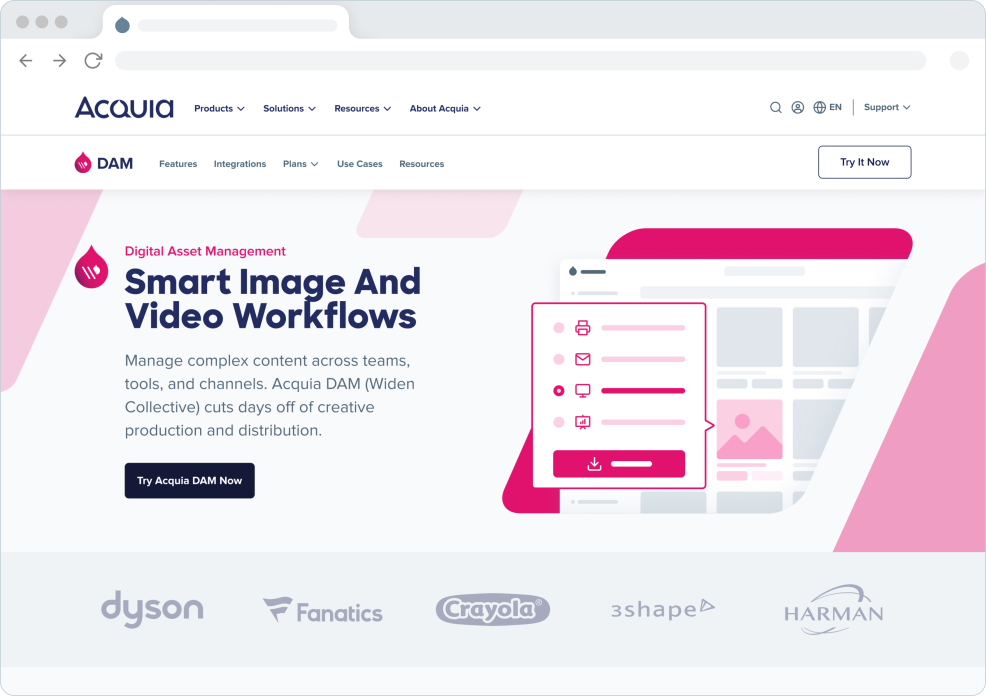
Widen Collective, part of Acquia, is a trusted name in enterprise digital asset management. In 2025, it continues to stand out with advanced automation for metadata tagging, asset distribution, and compliance tracking. Global organizations rely on Widen to ensure that every asset used in a campaign meets brand standards and legal requirements. With its powerful integrations and scalability, it is a strong option for businesses that need control at a global level.
Lucidpress (Marq)

Lucidpress, now rebranded as Marq, focuses on automated template creation for marketing materials. In 2025, it shines as a solution for businesses with distributed teams who need to maintain consistent brochures, flyers, and presentations. Its lockable templates ensure that branding elements cannot be altered, while automation features simplify the process of customizing documents for local markets. This balance of flexibility and control makes Marq a popular choice for franchises, educational institutions, and large sales teams.
Key Features to Look for in Automated Branding Solutions
Not every tool is created equal, and the right choice depends on your business size, workflow, and goals. However, there are a few features that define a great automated branding solution. These are the capabilities that make sure your brand looks consistent, professional, and adaptable across every platform.
Centralized brand guidelines
The platform should act as a single source of truth. This means everyone on your team has instant access to the latest logos, fonts, and color codes. Centralization eliminates mistakes and prevents outdated designs from slipping into campaigns.
Smart asset tagging and categorization
With hundreds or even thousands of brand files, automated tagging saves valuable time. AI powered systems can recognize and categorize images, logos, or documents automatically so teams can find what they need in seconds.
Automation for templates and campaigns
The best solutions allow you to create reusable templates and lock in brand rules. This ensures that social posts, presentations, and ads are always on brand, even when produced by non designers.
Collaboration and approval workflows
A strong automated branding tool makes teamwork easier. Managers can review, approve, and publish content in one place, which reduces long email chains and prevents delays.
Integrations with marketing and design tools
The software should connect seamlessly with platforms you already use, from design apps to content management systems. Integrations make automation more powerful because assets can flow directly into campaigns without manual uploads.
Final Thoughts
Automated branding has moved from being a nice-to-have feature to becoming a core part of modern brand management. In 2025, businesses cannot afford to waste time on repetitive tasks or risk inconsistency across different channels. The right platform ensures that every logo, template, and design choice reflects the brand identity with speed and accuracy.
Tools like Brandy lead the way by making brand guidelines accessible in one simple link, while other platforms such as Frontify, Bynder, Canva, Adobe Express, Widen Collective, and Marq each bring unique strengths to the table. What they all share is the ability to simplify brand control, boost collaboration, and free up creative teams to focus on innovation rather than administration.
The future of branding is about agility and trust. By adopting automated solutions today, businesses can prepare themselves for tomorrow’s challenges while staying true to their identity.