Brand Management Blog & Resources
Most people recognize strong brands long before a product appears on the screen. A single line in an advertisement or a short customer interaction can feel unmistakably connected to brands like Apple or Nike. That level of recognition is not created by visuals alone. It begins with people within the company who understand and believe in the brand and bring it to life through their everyday work.
This is the core idea behind internal brand engagement. It is the level of connection your employees and internal teams have with your brand identity, brand values, and the mission that guides the business. When your team is deeply aligned with the brand, everything they create and every interaction they have reflects that shared understanding.
Strong external branding is impossible without strong internal engagement. If teams are confused, disconnected, or unsure about the brand story, customers will see inconsistency in every touchpoint. A brand becomes powerful when employees feel involved in shaping it and take pride in representing it. This internal connection is the real foundation of long-term brand success.
What Internal Brand Engagement Really Means For A Company
Internal brand engagement is more than a set of guidelines or a collection of visual rules. It reflects how deeply employees understand the brand and how naturally they express it in their daily work. When teams connect with the brand story, they feel responsible for presenting it correctly and confidently in every situation.
True engagement means every person inside the company knows what the brand stands for, how it communicates, and the promise it makes to customers. It turns brand values into everyday behaviors. Employees do not follow instructions because they are required to. They do it because they believe in the brand’s purpose.
This shared understanding strengthens internal communication, supports decision-making, and helps teams stay aligned during growth or change. It also ensures that everyone speaks the same brand language, whether they create content, interact with customers, or manage internal operations. When employees feel connected to the brand, consistency becomes natural rather than forced.
Reasons Why Internal Brand Engagement Is Essential
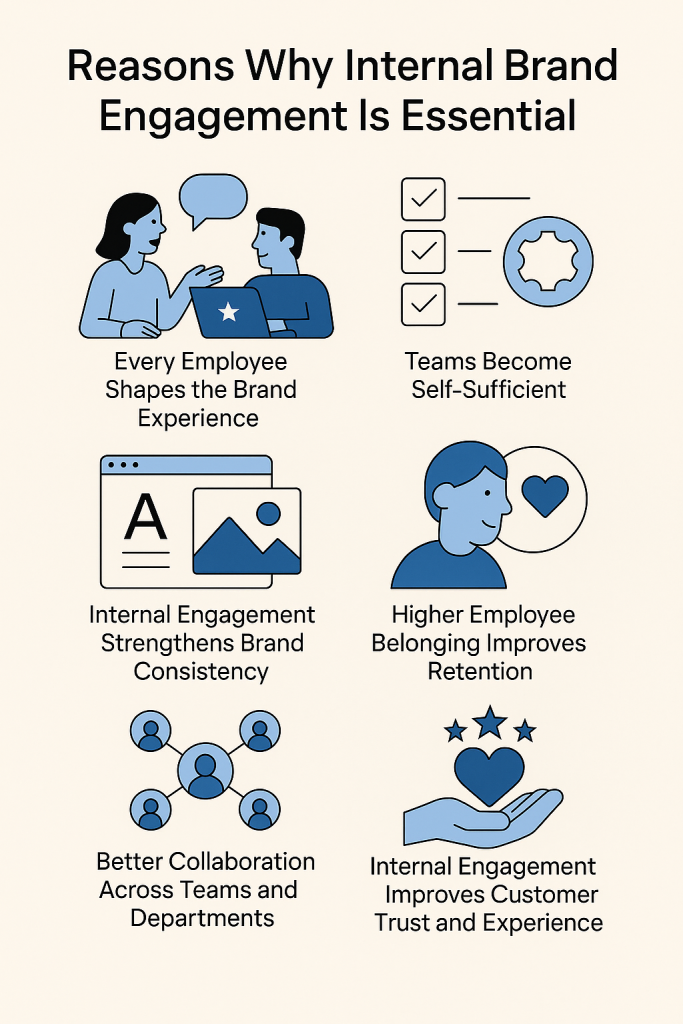
Internal brand engagement turns your employees into active contributors who strengthen the brand through their everyday actions. When teams understand and believe in the brand, the company delivers a consistent, memorable, and trusted experience across every touchpoint.
Internal Engagement Strengthens Brand Consistency
Brand consistency is one of the most powerful drivers of brand recognition. When customers repeatedly encounter the same visuals, tone, and messaging across every channel, the brand becomes easier to remember. However, consistency is impossible if internal teams are not aligned or lack clarity on how the brand should be presented. This is where internal brand engagement becomes essential.
Engaged employees understand why consistency matters and how it influences customer trust. They use approved logos and color palettes. They follow the right tone in emails and presentations. They create content that looks and feels unified with the rest of the brand. Even small details begin to align naturally because the brand values are clearly understood.
Companies that ignore internal engagement often face a common problem. Teams create content that looks mismatched, uses incorrect assets, or communicates conflicting messages. This weakens the brand impact and makes it difficult for customers to recognize the company across platforms. Research shows that strong brand consistency can drive significant revenue because customers feel more confident buying from a brand that looks reliable.
Internal engagement turns consistency into a shared responsibility. Instead of a few team members correcting mistakes, everyone contributes to maintaining the brand’s cohesion. This collective effort ensures a stronger presence in the market and a more trustworthy brand reputation.
Higher Employee Belonging Improves Retention
Internal brand engagement fosters emotional belonging, one of the strongest influences on employee retention. When employees feel connected to the company’s mission and understand how their work contributes to the larger purpose, they begin to see themselves as part of something meaningful. This connection builds loyalty and reduces the desire to look for opportunities elsewhere.
A strong internal brand gives employees a clear sense of identity. They know what the company stands for and how their values align with the organization. This clarity enhances the overall work experience and fosters a positive culture where people feel valued and understood. It becomes easier to build friendships, collaborate across teams, and participate in shared goals.
From a business perspective, higher retention saves significant cost and time. Replacing employees requires training, onboarding, and rebuilding team chemistry. When people stay longer, companies maintain internal knowledge, preserve customer relationships, and strengthen operational efficiency.
Employees who feel proud of their brand also become natural ambassadors. They share positive experiences, recommend the company to others, and bring enthusiasm to their daily responsibilities. This energy improves team morale and reinforces the brand identity internally and externally. Internal brand engagement is not just a cultural advantage. It is a long-term growth strategy that keeps talented people committed to the organization.
Better Collaboration Across Teams And Departments
Strong internal brand engagement creates a shared understanding across departments, reducing communication gaps. When every team knows the brand values, tone, and long-term direction, collaboration becomes smoother and more effective. People no longer work in isolated groups. Instead, they operate with a unified vision that guides decisions across marketing, product, sales, HR, and leadership.
This alignment improves project flow because teams know what the brand expects. Marketing does not need to repeatedly explain the brand identity. Product teams know how to communicate features. Sales teams deliver consistent pitches. Support teams use messaging that reflects brand personality. This reduces friction and creates faster decision-making.
Internal engagement also strengthens trust. When employees share the same understanding of the brand, they feel more connected and open to collaborating. They rely on each other’s expertise without questioning whether their contributions align with the brand’s direction.
A well-connected internal brand also improves cross-functional creativity. Teams share ideas more confidently because they understand the brand limits and possibilities. This leads to stronger campaigns, smoother product launches, and aligned strategies that make the company feel cohesive from within. Collaboration thrives when everyone plays from the same brand playbook.
Internal Engagement Improves Customer Trust And Experience
Customers expect a brand to feel consistent, friendly, and reliable across every interaction. Internal brand engagement helps deliver that experience naturally because employees know how to represent the company with confidence and clarity. When the internal team understands the brand’s mission, values, and communication style, customers experience predictable, trustworthy interactions.
This consistency builds trust. Whether a customer reaches out through email, social media, live chat, or phone, they experience the same tone and professionalism. They do not feel confused or disconnected because every team member communicates with the same understanding of the brand.
Internal engagement also leads to better problem-solving. When employees are aligned with the brand purpose, they make decisions that support the customer, protect the brand’s reputation, and reflect the business’s values. This creates a smoother customer journey and improves overall satisfaction.
Customers remember how a company makes them feel. Engaged employees create positive emotional experiences by showing empathy, clarity, and authenticity. These qualities become part of the brand identity itself. As a result, customer loyalty grows stronger, and the brand becomes more competitive in the market. Internal engagement is the foundation of a reliable, trusted customer experience.
Final Thought On The Importance Of Internal Brand Engagement
Internal brand engagement is the foundation that holds your brand together. A strong visual identity or a polished campaign will not create long-term impact unless the people behind it truly understand and believe in the brand. When employees feel connected to the mission and values, they naturally carry the brand forward in everything they do. This creates a unified identity that customers recognize and trust.
A brand becomes powerful when it lives inside the company before it appears outside. Engaged teams communicate more clearly, collaborate more effectively, and deliver a better experience to customers without needing constant direction. This internal strength builds external credibility and sets the company apart from competitors.
Investing in internal brand engagement is not optional for modern businesses. It is a long-term growth strategy that creates consistency, loyalty, and meaningful customer relationships. When the internal culture is aligned with the brand promise, the entire organization moves with clarity and confidence.