Every week, a new AI tool promises to make branding faster, cheaper, and more creative. From generating campaign visuals to drafting messaging and automating workflows, artificial intelligence is rapidly becoming part of everyday brand work.
For marketing and brand teams, this shift feels exciting. Tasks that once took days can now be done in minutes. Ideas flow faster. Teams feel empowered to do more with fewer resources.
But beneath that excitement sits a growing risk many brands underestimate.
AI adoption is no longer just a productivity decision. It is a reputation decision.
Customers are paying attention to how brands use AI. Regulators are struggling to keep up. Employees are experimenting with tools that may expose sensitive data. And when something goes wrong, it rarely stays internal.
The brands that will win the next decade are not the ones that adopt AI fastest. They are the ones understand how to use it responsibly while protecting trust, credibility, and long term brand value.
The Rise of AI in Brand and Marketing Teams
Artificial intelligence has quietly moved from experimental technology to everyday tool.
Brand teams now use AI to generate images, write copy, localize campaigns, analyze sentiment, support customers, and even propose creative directions. Generative AI tools make it easy to describe an idea in plain language and receive instant output.
This ease of use is precisely why adoption has exploded.
Unlike previous technologies, AI does not require deep technical expertise. Anyone can open a tool, enter a prompt, and generate something that looks finished enough to publish. That accessibility is powerful, but it also removes traditional checkpoints that once protected brand integrity.
How Generative AI Is Changing Brand Workflows
Generative AI tools have transformed how brand work gets done.
Designers can explore concepts faster. Marketers can draft messaging in seconds. Regional teams can localize content without waiting for central approval. Customer support teams can automate responses at scale.
On the surface, this looks like progress.
However, many of these outputs bypass established brand guidelines, approval processes, and legal checks. What used to be deliberate and reviewed is now instant and informal. Without guardrails, teams may unintentionally create content that is misleading, non compliant, or misaligned with brand values.
Speed Versus Responsibility
Speed is seductive.
When deadlines are tight and expectations are high, AI feels like a solution. But speed without responsibility creates blind spots.
A brand may save time today while accumulating risk for tomorrow. AI generated assets may look convincing but lack disclosure. Messaging may sound polished but misrepresent reality. Data entered into tools may expose information that was never meant to leave the organization.
Responsible brands recognize that efficiency cannot come at the cost of trust.
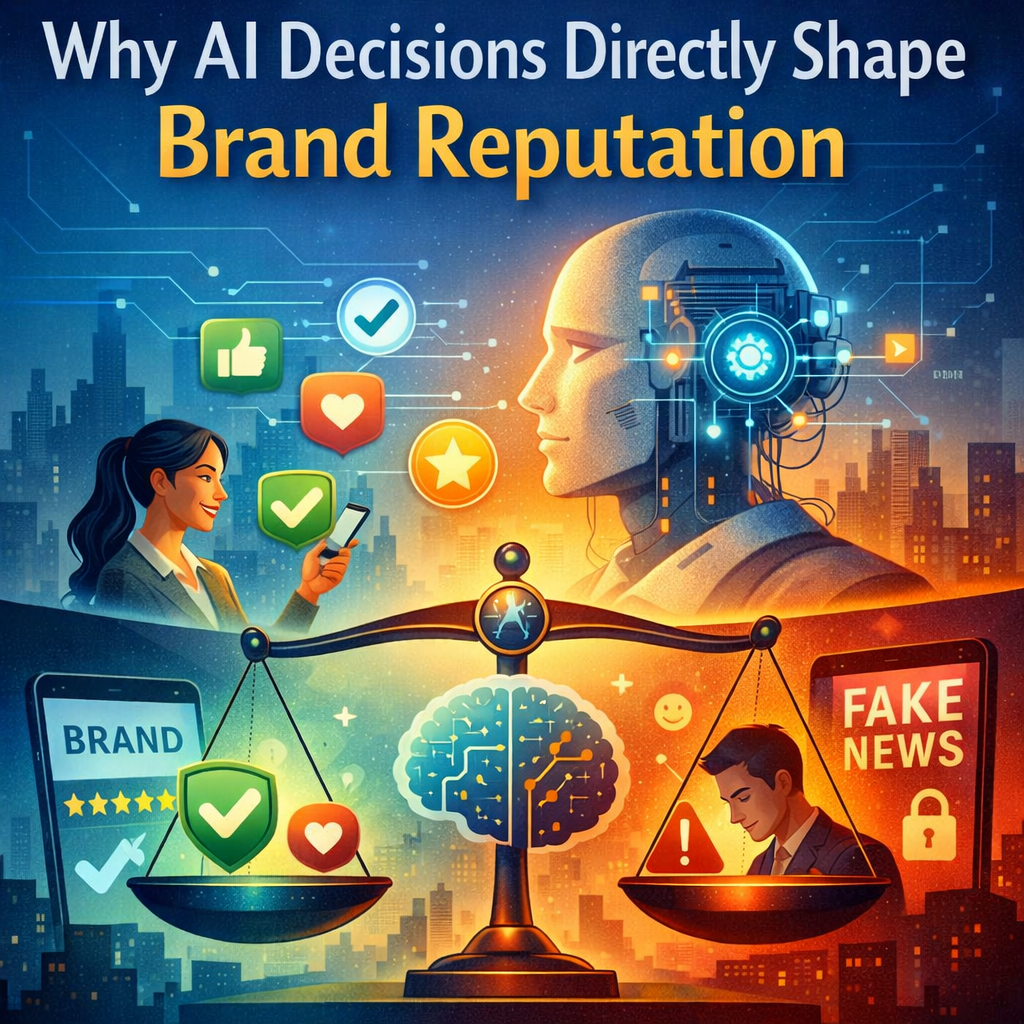
Why AI Decisions Directly Shape Brand Reputation
Brand reputation has always been fragile. AI makes it even more so.
Surveys consistently show that while professionals are optimistic about AI, they are equally concerned about legal and ethical implications. Customers are curious but cautious. They want innovation, but not at the expense of honesty, privacy, or fairness.
How a brand uses AI sends a powerful signal about its values.
Is AI being used to create genuine value, or to cut corners? Is it transparent, or hidden? And, is it respectful, or intrusive?
These questions shape public perception long before regulators intervene.
Trust Is the Currency of Modern Brands
Trust sits at the core of strong brands.
Customers choose brands they believe in. They forgive mistakes more readily when trust exists. Research shows that trusted brands are significantly more resilient during crises.
AI usage can either strengthen that trust or quietly erode it.
When brands use AI responsibly, customers see innovation paired with integrity. And, when brands use AI carelessly, trust breaks fast and repairs slowly.
When Innovation Crosses the Line
The challenge with AI is that boundaries are often unclear.
A decision that feels reasonable internally may be perceived very differently externally. An image that saves time may violate advertising standards. A message that sounds human may be considered deceptive if AI generated content is not disclosed.
These missteps rarely start with bad intentions. They start with assumptions. And once exposed, they can trigger public backlash that overshadows the original goal.
Establishing Trust During Rapid AI Adoption
Trust does not come from avoiding AI. It comes from using it openly and thoughtfully.
As AI becomes embedded in brand workflows, transparency becomes essential. Customers do not expect perfection, but they do expect honesty.
Transparency Builds Confidence
Clear communication matters.
When brands label AI generated content, explain how tools are used, and set expectations, they reduce confusion and suspicion. Transparency signals respect. It shows that the brand values its audience enough to be upfront.
This applies to visuals, messaging, customer interactions, and internal processes. Disclosure does not weaken credibility. In many cases, it strengthens it.
Lessons From Public AI Backlash
Several brands have already learned this lesson the hard way.
When AI generated content is used without disclosure, or when it conflicts with legal or social expectations, public response can be swift. Media coverage amplifies the issue. Trust erodes quickly. Apologies follow.
The takeaway is not to stop innovating. It is to pause and consider how AI decisions might be interpreted outside the organization.
Responsible adoption asks a simple question before deployment. Would we feel comfortable explaining this choice publicly.
Privacy Risks Brands Cannot Ignore When Using AI

One of the most overlooked risks of AI adoption is privacy.
Many employees use AI tools without realizing that the information they enter may be stored, processed, or reused. Prompts can contain sensitive customer data, internal strategy, financial details, or personal information.
Without guidance, well meaning teams can unintentionally create compliance issues and reputational damage.
The Hidden Risks of Prompt Based Tools
Most AI tools rely on third party models. Data entered into them may not be private in the way users assume.
This creates challenges for brands operating under regulations like GDPR and other data protection laws. Even a single misuse can expose customer trust and invite scrutiny.
Responsible brands invest in education. They define what can and cannot be shared. They treat AI tools with the same caution as any external platform.
Customer Trust Versus Surveillance Marketing
AI also raises deeper ethical questions.
As personalization becomes more sophisticated, the line between helpful and intrusive blurs. Data driven insights can improve relevance, but they can also feel manipulative if taken too far.
The same applies internally. AI tools that track productivity or wellbeing may sound beneficial, but they risk creating discomfort or mistrust if transparency and consent are missing.
When customers or employees feel monitored rather than supported, trust erodes.
Ethical AI Is a Leadership Responsibility
As AI becomes more embedded in brand operations, responsibility shifts upward.
Ethical AI is not something a legal team can solve alone. It is not something that can be outsourced to software vendors. It sits squarely with leadership.
The reality is simple. No one fully understands where AI will lead. The technology is evolving faster than regulation, culture, and social norms. That uncertainty makes humility essential.
Brands that treat AI as a tool they fully control are more likely to stumble. Brands that acknowledge uncertainty and build safeguards are more likely to earn trust.
Why Good Intentions Are Not Enough
Most AI related brand crises begin with reasonable goals.
Save time. Reduce costs. Improve creativity. Scale output.
What is often missing is a pause to consider unintended consequences. How will customers perceive this. Does this align with our values. Are we prepared to explain this decision publicly.
Without clear guidance, teams make isolated choices that accumulate into risk. Responsible brands replace assumptions with shared principles.
Transparency as a Reputation Repair Tool
Mistakes will happen. That is unavoidable.
What separates resilient brands from fragile ones is how they respond. Brands that acknowledge errors quickly and explain corrective actions often regain trust faster than those that stay silent or deflect responsibility.
Transparency signals maturity. It tells customers that the brand takes accountability seriously, even when experimenting with new technologies.
In times of change, honesty becomes a competitive strength.
Creating an Ethical AI Charter for Your Brand
One of the most effective ways to operationalize responsible AI is through an ethical charter.
An ethical AI charter is not a legal document. It is a cultural one. It defines how AI should and should not be used within the brand, especially when regulations are unclear or lagging behind reality.
What an Ethical AI Charter Should Include
Strong ethical charters share common principles.
- Respect for user privacy and data protection
- Commitment to fairness and bias reduction
- Clear expectations around transparency and disclosure
- Emphasis on explainability and accountability
- A focus on creating value without harm
These principles act as a decision making framework. When teams face uncertainty, the charter provides clarity.
Aligning AI Use With Brand Values
An ethical charter only works if it reflects the brand’s identity.
Responsible AI looks different across industries and markets. What matters is alignment. AI decisions should reinforce what the brand stands for, not contradict it.
When values guide technology use, teams feel empowered to innovate without fear of crossing invisible lines. Culture becomes a safeguard.
Responsible AI as a Competitive Advantage
Responsible AI is often framed as a constraint. In reality, it is an advantage.
As customers grow more aware of AI risks, they gravitate toward brands that demonstrate care, restraint, and integrity. Trust driven brands stand out in crowded markets.
Responsible adoption also improves internal alignment. Teams work with confidence when expectations are clear. Decision making becomes faster because principles replace guesswork.
Over time, trust compounds. Brands that protect credibility today are better positioned to scale tomorrow.
Preparing Your Brand for an AI Powered Future
AI does not operate independently. It reflects the choices of the people who deploy it.
The future of AI in branding will not be defined by tools alone. It will be defined by judgment, governance, and values.
Brands that approach AI with curiosity and caution will create meaningful innovation. Brands that chase speed without responsibility will face increasing scrutiny.
The goal is not perfection. It is intention.
Responsible AI adoption starts with asking better questions. Why are we using this. Who does it affect. Are we comfortable standing behind this decision publicly.
Those questions shape the future more than any algorithm.
How Centralized Brand Governance Supports Responsible AI Use
As AI accelerates content creation, governance becomes critical.
When assets, guidelines, permissions, and approvals are fragmented, AI amplifies inconsistency. Teams generate content faster, but alignment weakens.
Centralized brand systems help restore balance. They provide a single source of truth for assets, messaging, and standards. They reduce reliance on memory and interpretation.
Platforms like Brandy support responsible AI adoption by ensuring teams work within clear brand boundaries. AI outputs can move faster without drifting away from what the brand represents.
Governance does not slow innovation. It protects it.
Final Takeaways
Responsible AI adoption is not about limiting creativity. It is about protecting trust.
Brands that succeed with AI will be those that balance innovation with integrity. They will prioritize transparency, respect privacy, and align technology use with core values.
AI will continue to evolve. Reputation will remain fragile.
The brands that thrive will treat responsible AI not as a compliance task, but as a defining part of their identity.
FAQs
Responsible AI adoption means using artificial intelligence in ways that respect customers, protect data, and align with brand values. It focuses on transparency, fairness, and long term trust rather than short term efficiency.
AI misuse can lead to misleading content, privacy violations, or ethical concerns. When exposed publicly, these issues can trigger backlash, regulatory scrutiny, and loss of customer trust.
Companies should set clear rules around what data can be shared, educate teams on AI risks, and use tools that align with data protection standards. Governance and training are essential.
Ethical AI builds credibility. Customers are more likely to trust brands that use technology responsibly, communicate openly, and demonstrate respect for societal expectations.