
Brand Management Blog & Resources
Marketing in 2026 looks very different from even a few years ago. Content volumes have exploded. Campaigns now span more platforms, formats, and regions, while expectations for speed and relevance keep climbing.
AI marketing tools are no longer experimental. They are core infrastructure. But while AI promises efficiency, many teams struggle to turn that promise into real results. Faster output does not automatically mean better marketing.
This guide breaks down the most important AI marketing tools in 2026 and explains how high performing teams use them together, without losing brand consistency or control.
What Is AI Marketing and Why It Actually Works
AI marketing is not about replacing marketers or creatives. It is about removing friction from everyday work and helping teams make better decisions at scale.
What AI Marketing Really Means in 2026
AI marketing combines artificial intelligence, machine learning, and automation to support content creation, campaign execution, and performance analysis. In 2026, AI is no longer a standalone tool. It is embedded across platforms, quietly powering recommendations, tagging, forecasting, and personalization.
Instead of guessing what might work, teams use AI to learn from real data and adapt faster.
How AI Improves Speed Relevance and ROI
When applied correctly, AI reduces manual effort across the content lifecycle. Drafts are created faster. Visuals are adapted automatically. Campaigns are optimized based on real behavior, not assumptions.
For marketing teams, this means faster launches and clearer performance signals. For creative teams, it means fewer repetitive tasks and more time spent on ideas that matter.
AI works because it supports people, not because it replaces them.
The Real Problem With AI Marketing Tools Most Teams Ignore
The biggest challenge with AI marketing is not capability. It is coordination.
As teams adopt more AI tools, marketing stacks grow quickly, often without a clear plan for how everything fits together. Copy is generated in one platform, visuals are created in another, ads are optimized elsewhere, and performance data lives in separate analytics tools. While each platform works well on its own, they rarely share full context with one another, making it harder for teams to maintain alignment, visibility, and control as complexity increases.
This disconnect creates real problems. Assets get duplicated. Versions drift. Teams lose track of what is approved or current. Performance data becomes detached from the content that produced it.
AI accelerates production, but without a central system to organize and govern output, complexity grows faster than value.
High performing teams solve this by focusing less on individual tools and more on how everything connects.
The Best AI Marketing Tool Categories for 2026
There is no single best AI marketing tool. Success comes from choosing the right combination and anchoring it with the right foundation.
Modern AI marketing stacks usually fall into a few core categories. Each plays a specific role, and each delivers more value when connected through shared workflows and asset management.
AI Workflow and Marketing Orchestration Tools

AI driven workflows are what turn fast content creation into real marketing output. Without orchestration, even the best AI tools create bottlenecks instead of momentum.
Why workflows break as AI usage grows
As teams produce more content with AI, approvals, handoffs, and publishing quickly become the weakest links. Assets move between project tools, design platforms, and messaging apps with limited visibility. This leads to delays, duplicated work, and confusion around what is final or approved.
AI amplifies output, but without structure, it also amplifies chaos.
AI tools teams use for workflow and orchestration
Modern marketing teams rely on a mix of AI assisted workflow tools to keep work moving:
- Asana AI and ClickUp AI help prioritize tasks, predict timelines, and surface blockers before they stall campaigns
- Monday AI automates routing, status updates, and workload balancing across teams
- Notion AI supports campaign planning, documentation, and cross team alignment
- Zapier and Make connect marketing tools and automate repetitive handoffs
- Airtable AI blends structured data with creative workflows for campaign tracking
These tools bring intelligence to project management, but they focus primarily on tasks and timelines, not the assets themselves.
Where workflow tools fall short without asset intelligence
Workflow platforms can tell teams what needs to happen next, but they rarely understand the content being moved through them. Files still live elsewhere. Versions still get lost. Brand context is missing.
This gap becomes more obvious as AI generated content increases.
AI Content and Copy Generation Tools
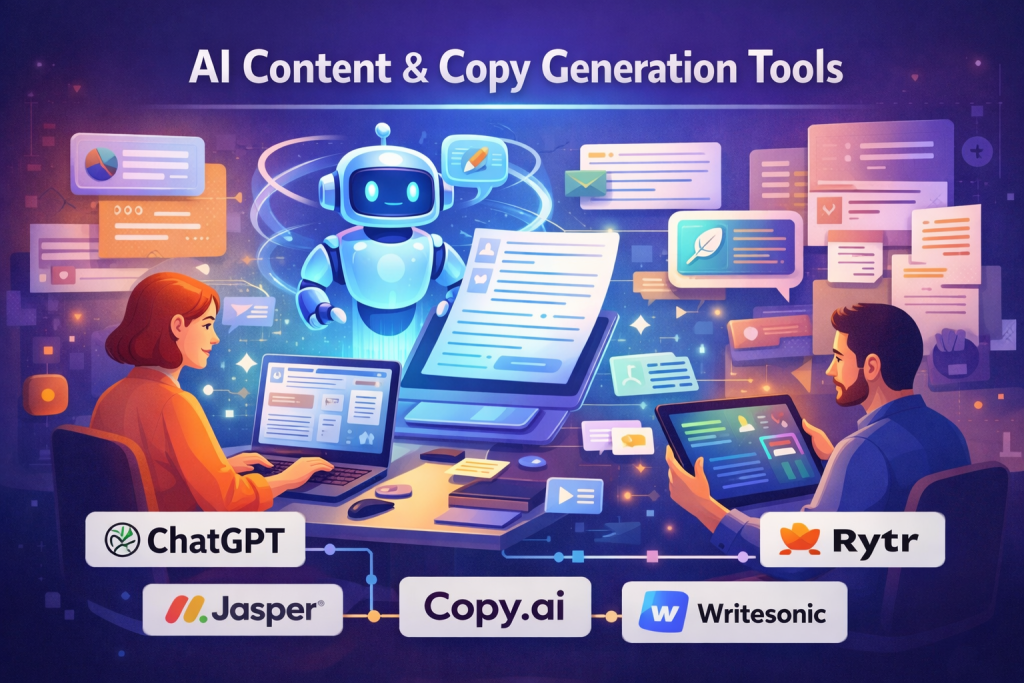
Writing tools help marketing teams scale content production without slowing campaigns or burning out writers.
AI tools teams use for content and copy creation
Marketing teams commonly rely on:
- ChatGPT for long form content, ideation, outlines, and campaign messaging
- Jasper for brand aligned marketing copy, ads, and landing pages
- Copy.ai for short form copy like social posts and product descriptions
- Writesonic for SEO focused blogs and ad copy
- Rytr for fast rewriting, tone adjustments, and content expansion
These tools reduce time spent drafting and allow teams to test more ideas across channels.
Where AI writing tools struggle without brand context
AI copy tools generate text quickly, but they do not understand brand nuance on their own. Without reference content, tone can drift, leading to inconsistent messaging across teams.
This is where writers often end up rewriting AI-generated output or reviewing it with an AI detector rather than refining it.
How brand systems support AI content tools
When AI writing tools are supported by a brand asset system like Brandy, teams can reference approved messaging, voice guidelines, and examples while generating content.
This keeps AI output aligned with the brand, rather than requiring manual corrections later.
AI Image Video and Design Creation Tools
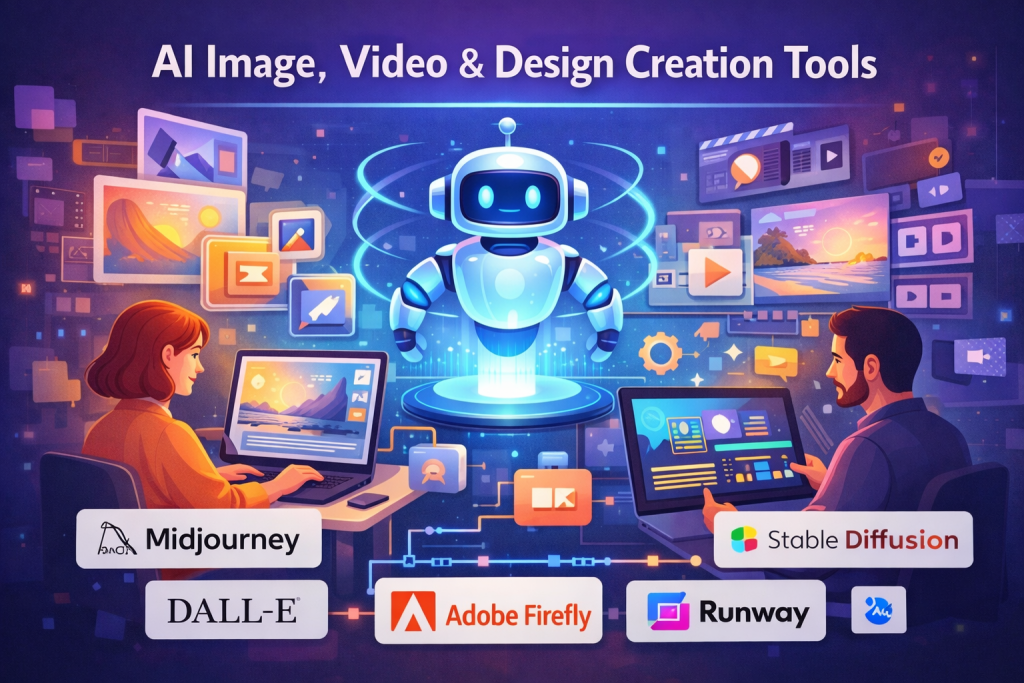
Visual AI tools help creative teams move from concept to execution faster than ever.
AI tools used for image and design generation
Creative teams commonly use:
- Midjourney, DALL E, and Stable Diffusion for AI generated images and concepts
- Adobe Firefly for brand safe image generation and design assistance
- Canva AI for quick marketing visuals and social assets
These tools allow teams to prototype ideas and localize visuals without starting from scratch.
AI tools for video creation and editing
For motion content, teams rely on:
- Runway for AI video editing, background removal, and effects
- Pika Labs for short form animations and video generation
These platforms help teams produce video content faster for ads, social, and campaigns.
Why AI design tools need asset management
AI design tools generate many variations quickly. Without a system like Brandy to store, tag, and organize outputs, teams lose track of usable assets and approvals.
Strong asset management turns AI creativity into reusable brand value.
AI Advertising and Campaign Optimization Tools

AI advertising tools help marketers maximize ROI while reducing manual optimization work.
Advertising tools used for campaign optimization
Growth focused teams commonly use:
- Albert AI for autonomous campaign management and budget optimization
- Adext for AI driven ad testing and audience targeting
- Acquisio for automated bid management and performance insights
- Persado and Phrasee for AI powered ad copy testing and optimization
These tools predict performance and adjust campaigns in real time.
Why ad tools depend on strong creative systems
As AI ad platforms test more variations, the demand for approved creative increases. Without centralized access to brand assets, teams risk using outdated or off brand visuals.
Connecting ad tools to a brand asset hub ensures creative stays consistent while performance improves.
AI Analytics Segmentation and Personalization Tools
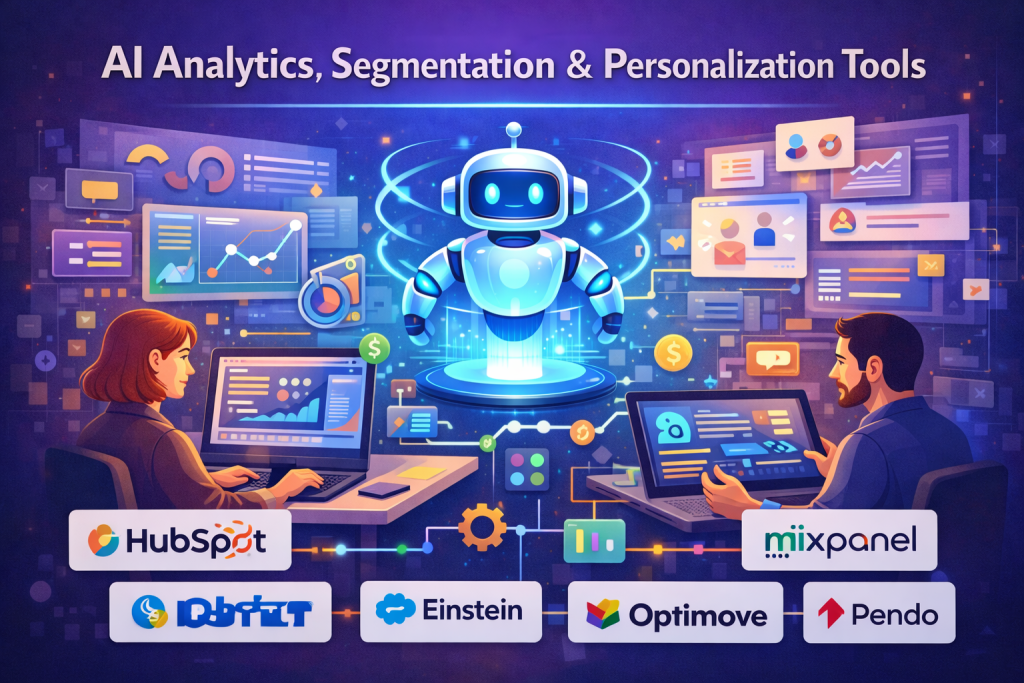
Analytics tools help teams understand what content works and why.
AI tools used for marketing analytics and insights
Marketing teams often rely on:
- HubSpot AI for CRM insights, lead scoring, and campaign performance
- Salesforce Einstein for predictive analytics and pipeline forecasting
- Mixpanel for behavior analysis and content engagement tracking
- Pendo for product and content usage insights
- Optimove for predictive segmentation and personalization
These platforms surface patterns that manual analysis often misses.
Why analytics work better with asset level data
Analytics tools track performance, but they rarely connect results back to specific brand assets. When analytics integrate with systems like Brandy, teams can see which visuals and documents drive engagement.
This turns reporting into actionable insight instead of static dashboards.
How Marketing Teams Should Evaluate AI Marketing Tools
Not every AI tool is right for every team. The goal is not to adopt the most tools, but to adopt the right ones.
Questions Marketing Leaders Should Ask
Before adding a new AI platform, teams should ask whether it integrates easily with existing systems, reduces complexity, and supports long term goals. Tools that create more manual work or data silos quickly lose value.
Scalability and interoperability matter more than individual features.
Avoiding Short Term AI Wins That Create Long Term Mess
Many teams chase quick AI gains without considering governance. Over time, this leads to duplicated assets, inconsistent messaging, and workflow breakdowns.
High performing teams prioritize systems that grow with them, not tools that solve only one isolated problem.
How Creative Teams Win With the Right AI Stack
Creative teams benefit most when AI removes friction instead of adding complexity.
Speed without Losing Brand Control
AI helps creatives produce faster, but brand standards must remain intact. Clear versioning, approvals, and asset ownership prevent confusion and rework.
When creatives trust the system, they spend less time managing files and more time creating meaningful work.
Empowering Non-Designers Safely
AI enables marketers, regional teams, and partners to create content without design expertise. Templates and brand controls ensure that self service does not lead to off brand results.
This balance of flexibility and governance is critical for modern creative operations.
Why Brandy is the Smart Foundation for AI Marketing in 2026

AI marketing only works when content, teams, and tools stay connected.
Brandy as the Control Center for AI Driven Marketing
Brandy acts as a centralized home for brand assets, guidelines, and approved content. It gives teams one reliable place to access what they need without searching across tools.
As AI output increases, having a single source of truth becomes essential.
How Brandy Supports AI Workflows across Teams
Brandy helps organize assets, manage versions, and streamline sharing across marketing and creative teams. It supports faster approvals, clearer collaboration, and easier reuse of high performing content.
Instead of slowing teams down, it removes friction from everyday workflows.
Why AI Output Needs Brand Governance
AI accelerates content creation, but governance protects trust. Brand consistency, accuracy, and reliability matter more as content scales.
Brandy ensures that automation supports brand growth rather than undermining it.
Final Thoughts Building an AI Marketing Stack That Lasts
AI marketing is not about collecting tools. It is about building a connected system that supports people and processes.
The most successful teams in 2026 focus on clarity, structure, and alignment. They use AI to move faster, but they anchor everything in strong brand foundations.
When AI tools, digital assets, and teams work together, marketing becomes more effective and more sustainable. That is where real competitive advantage lives.