Brand Management Blog & Resources
Starting a business is easier than ever. But standing out? That is where the real challenge begins. With millions of new businesses entering the market every year, many offering similar products or services, customers are faced with too many options. In this crowded space, being good is not enough. You need to be memorable.
That is where brand differentiation comes in. It is not about being louder or more aggressive. It is about finding the unique thread that makes your brand irreplaceable to the people who matter most.
Look at brands like Spanx, Google, or Fenty Beauty. They did not just enter their markets. They disrupted them. Each found a clear, focused way to stand apart and became the go-to name in their space. Their success came not from following trends but by owning what made them different.
Whether you are just getting started or looking to grow an existing brand, knowing how to set yourself apart is key. This guide will walk you through the strategies that help businesses define their identity, connect with their audience, and stay ahead of the competition. Because in today’s market, blending in is not an option. Only those who stand out move forward.
What Is Brand Differentiation and Why It Works
Brand differentiation is the practice of setting your business apart from others in your industry by offering something distinct. This could be a unique product feature, a specific customer experience, or even a particular tone or mission that defines your identity. The key is to offer value in a way that your competitors do not.
Differentiation does not always require something radically new. It may be how you present your brand, how you speak to your audience, or the feeling you leave behind. A brand’s difference becomes its reason to exist in the minds of its customers.
When done with intention, brand differentiation helps your audience understand what makes you special at a glance. It gives them a reason to choose you, not because of discounts or convenience, but because they see alignment.
It also builds trust. When people see a clear purpose or feel a connection, they are more likely to return. Differentiation reduces the pressure to compete on price and turns casual buyers into loyal customers.
Key Benefits of Differentiation Strategy
- Stronger customer appeal
When your brand speaks directly to a specific audience, it creates a sense of belonging. Tailored messaging and offerings show that you understand their needs, lifestyle, and preferences. This kind of alignment makes your product feel like the obvious choice. - Loyalty and emotional connection
Customers are more likely to stay loyal to brands that share their values or represent something meaningful to them. Whether it is ethical sourcing, inclusive messaging, or a story that resonates, emotional connection builds trust and keeps people coming back. - Premium pricing
A well-differentiated brand can confidently charge higher prices. When customers believe your offering is unique or better suited to their values, price becomes less of a barrier. You move out of the comparison zone and into a category of your own. - Competitive visibility
In markets flooded with similar options, brands that look or sound different get noticed first. Differentiation helps you stay top of mind and makes your brand easier to talk about and share. - Long-term brand memory
When customers experience something distinctive, they remember it. Memorable packaging, a unique voice, or an unusual customer journey makes your brand stick. These small but meaningful touches help increase lifetime value and reduce churn over time.
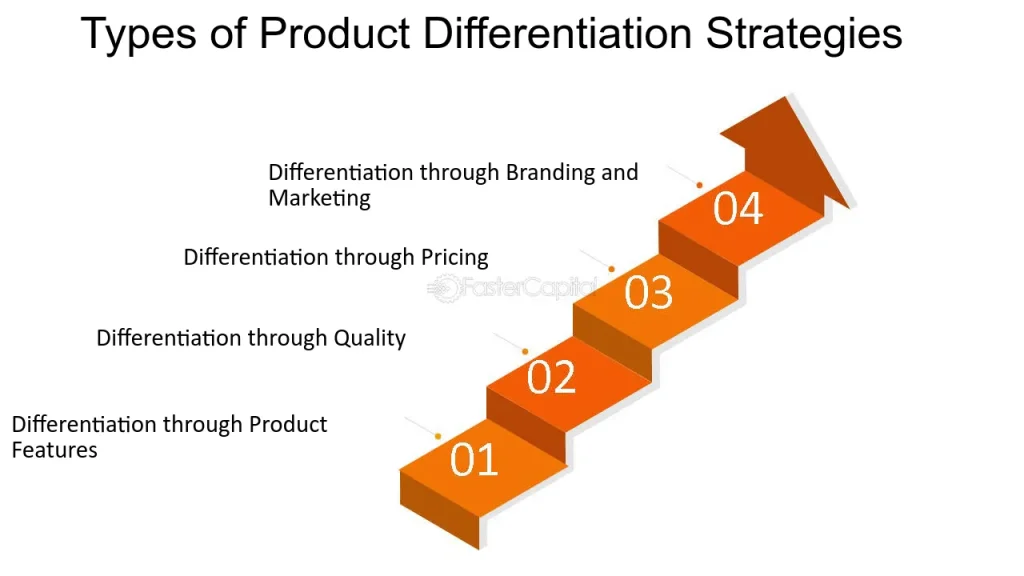
Types of Brand Differentiation Strategies That Work
Not all brands stand out the same way. Some win through products. Others earn trust through values or experience. These core strategies offer flexible ways to build lasting distinction.
Product differentiation
This strategy centers on what you sell. It focuses on innovation, exclusivity, craftsmanship, or sourcing. A brand may offer handmade items, eco-certified materials, or limited edition releases. For example, a company selling single-origin coffee or artisan jewelry highlights uniqueness in the product itself. These details attract buyers who care about quality, story, or scarcity.
Service differentiation
Here, the spotlight is on how the brand treats its customers. Fast response times, generous returns, onboarding help, or personalized follow-ups all fall under this approach. Brands that offer same-day delivery, round-the-clock support, or tailored recommendations make customers feel seen and supported. A great product is important, but great service keeps people coming back.
Reputation differentiation
Your reputation is built on more than your product. It includes your brand story, your visuals, and how people perceive your mission. A company that embraces ethical sourcing, leads social change, or delivers consistent design across platforms can build a strong emotional following. These brands stay top of mind because they make people feel good about their choices.
Pricing differentiation
This is about positioning your brand based on how much customers are willing to pay and what that price says. Are you affordable and accessible, mid-range with value, or luxury with exclusivity? Budget meal kits appeal to practical families. Gourmet boxes with premium ingredients attract those seeking an elevated experience.
Each of these strategies can work independently or in combination. The right fit depends on your industry, your audience, and what you want your brand to be known for.
Broad vs Focused Differentiation Strategies
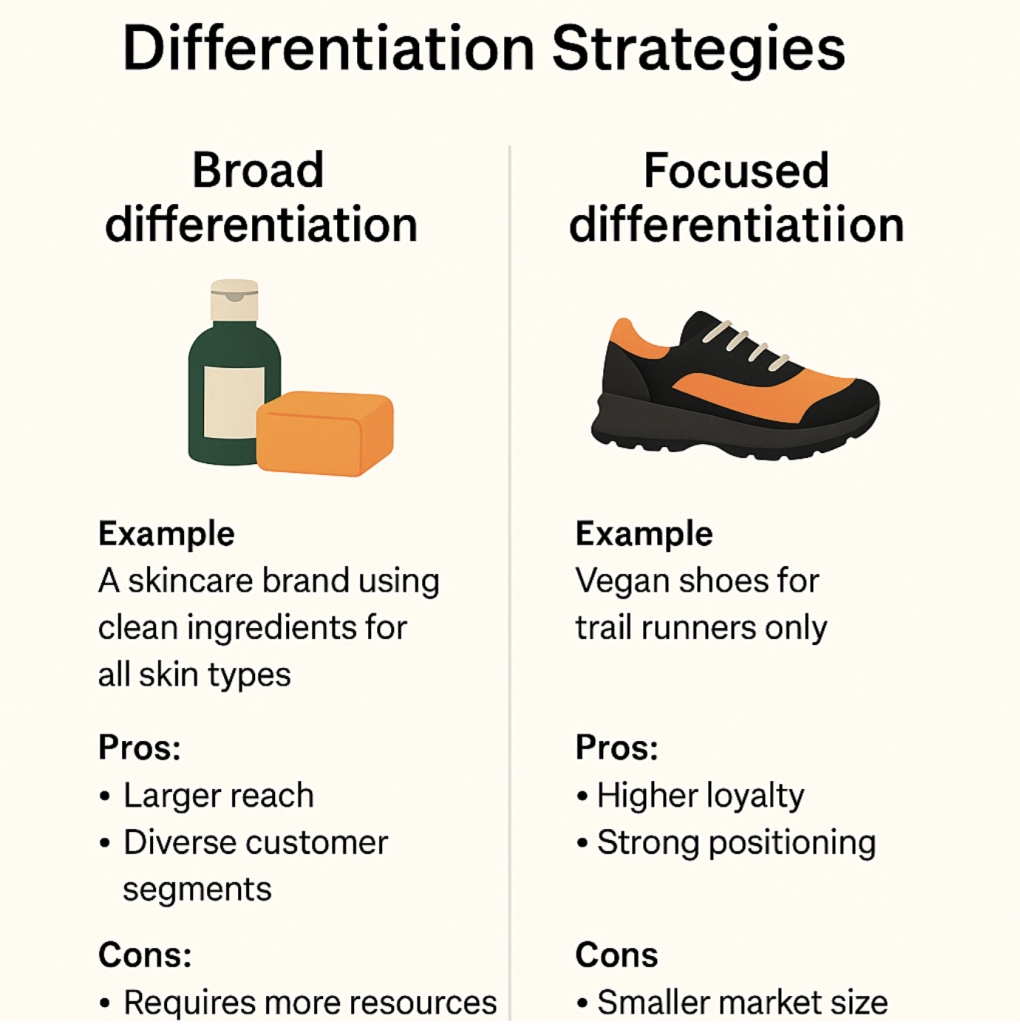
Not all differentiation strategies follow the same path. Some brands serve a wide audience with a unique approach, while others thrive by owning a narrow niche.
Broad differentiation
This approach involves offering a unique value that appeals to a wide and varied customer base. It could be a product with universal benefits or a brand identity that resonates across different demographics. For example, a skincare brand that uses clean, non-toxic ingredients designed for all skin types falls into this category.
Pros
- Wider reach and potential for growth
- Attracts multiple customer segments
- Builds a flexible, inclusive brand image
Cons
- Requires more marketing effort and messaging consistency
- Harder to deeply connect with specific audience needs
Focused differentiation
This strategy targets a very specific audience with a specialized product or service. A company that sells only vegan trail running shoes for eco-conscious athletes is practicing focused differentiation.
Pros
- Creates high brand loyalty within the niche
- Easier to dominate and lead in a small category
- Messaging is sharper and more effective
Cons
- Smaller customer base
- Limited flexibility to pivot or expand
The choice between broad and focused differentiation depends on your current resources, your target market, and the long-term direction of your business. Both approaches can work well when aligned with a clear vision and consistent execution.
5 Actionable Steps to Build a Differentiation Strategy
Differentiation starts with clarity and ends with consistency. These steps will help you define what sets your brand apart and communicate it with confidence.
Step 1: Identify what makes you unique
Start by doing an honest assessment of your product, service, brand story, and customer experience. What stands out? It might be the origin of your materials, your customer-first policies, or even the way your product is designed. Examples include using recycled packaging, being a second-generation family-run business, or offering deeply personalized products.
Step 2: Research your audience and competition
Understanding the market helps reveal where your brand can shine. Use surveys, social media feedback, and competitor research to spot patterns. Identify what customers love, what frustrates them, and what no one else is doing well. This shows where the real opportunities lie.
Step 3: Build your unique value proposition
Your value proposition is the one-line promise that explains your brand’s edge. It must be specific, customer focused, and emotionally resonant. A good value proposition connects the benefits of your brand to the desires of your ideal buyer.
Step 4: Share your brand story
Storytelling builds trust and human connection. Let your audience know how and why your brand came to life. Was it born from a personal experience? A mission to solve a problem? A deep passion? The more human your story, the more relatable your brand becomes.
Step 5: Reflect your difference in all brand messaging
Your visuals, tone of voice, web design, packaging, and even customer service scripts should all reinforce what makes you different. This consistency builds recognition and credibility. Create brand guidelines to ensure your team maintains that consistency across every platform.
When these steps are carried out with intention, your brand’s identity becomes clear not only to your audience but also to your internal team. That clarity is the foundation of lasting differentiation.
Brand Messaging That Reflects Differentiation
Once you know what makes your brand different, your messaging must bring it to life. Every touchpoint is an opportunity to reinforce your uniqueness.
Messaging is not just about what you say but how you say it. Your tone of voice, visual style, and copywriting should all reflect your brand’s identity. If you are a wellness brand, for instance, a calming tone and clean design can instantly create the right mood. If your brand is bold and playful, that energy should show in your headlines, emails, and packaging.
Consistency is what builds trust. Your audience should be able to recognize your brand across social media, your website, and even your product descriptions. That consistency makes your message more powerful and your presence more memorable.
To maintain that alignment, use a centralized brand guideline platform. It allows your entire team to access approved messaging, visuals, and tone examples. This not only protects your brand’s integrity but also empowers your marketing and design teams to move faster without second-guessing what feels on brand.
Strong messaging keeps your differentiation alive. It helps your audience understand what you stand for and why it matters.
Common Mistakes That Kill Differentiation
Even a great brand strategy can fall flat if it is not protected. Avoiding common missteps can save your differentiation from fading into the background.
One of the biggest mistakes brands make is copying their competitors. Imitation may feel safer, but it waters down your voice and makes your message forgettable. Another problem is inconsistency. If your brand looks and sounds different across platforms, customers get confused and lose trust.
Some businesses fail to truly understand their audience. When your messaging or offerings do not align with what customers care about, your uniqueness loses relevance. Others try too hard to be different and end up offering no real value.
Ignoring feedback or market shifts also leads to stale differentiation. Great brands evolve while staying true to their core.
Stay clear of these traps to keep your brand credible, focused, and easy to remember.
How Brandy Helps Maintain Brand Differentiation
A great brand strategy means little without the tools to keep it consistent. That is where Brandy becomes essential.
Brandy gives teams a single place to manage and share all approved brand assets. From logos and fonts to messaging templates and visual guidelines, everything stays organized and up to date. This reduces the risk of miscommunication, outdated files, or design inconsistencies.
For growing teams or those working across time zones, Brandy ensures every member stays aligned with the brand’s identity from day one. Designers, marketers, and freelancers can all access the right assets quickly, without needing constant approvals.
Even as your brand evolves, Brandy helps you preserve the core elements that make it unique. You stay flexible without losing clarity.
By keeping everything streamlined and accessible, Brandy protects your differentiation and reinforces your brand across every channel.
Final Thoughts: Differentiate or Disappear
In today’s market, blending in is the fastest way to be forgotten. If your brand looks, sounds, or feels like everyone else, customers will move on.
Differentiation is more than a strategy. It is a way to create deeper relationships, spark attention, and build long-term trust. The most successful brands are those that stay honest about who they are while adapting to change.
Start by identifying what makes your brand special. Build your story around it. Share it with clarity and consistency. And use tools like Brandy to make sure your team protects and delivers that difference every day.
When customers recognize your brand instantly and feel something real, that is when loyalty begins. That is when your brand becomes unforgettable.