Brand Management Blog & Resources
Expanding into new markets is one of the most exciting phases of business growth. It signals maturity, ambition, and confidence. But for many companies, global expansion exposes weaknesses they did not know existed. Branding is often the first place where cracks start to show.
What looks like a strong brand at home can quickly feel fragmented when different regions begin creating their own materials, adapting messaging independently, or working around unclear guidelines. Logos shift slightly. Tone becomes inconsistent. Legal requirements are missed. Over time, the brand starts to feel unfamiliar even to loyal customers.
International brand management exists to prevent this breakdown. It is not about controlling creativity or forcing uniformity. It is about creating systems that allow a brand to scale across borders while staying recognizable, trusted, and compliant in every market it enters.
This guide explores how international brand management works today, why it matters more than ever, and how businesses can build global brands that feel local without losing control.
What International Brand Management Really Means Today
International brand management is often misunderstood as a marketing task. In reality, it sits at the intersection of branding, operations, compliance, and technology.
Defining International Brand Management in Practical Terms
At its core, international brand management is the process of maintaining a consistent brand identity across multiple countries while allowing for meaningful local adaptation. It governs how logos, messaging, visuals, documents, and digital assets are used by teams operating in different regions.
This includes deciding what must remain consistent globally, such as brand values, core visual identity, and positioning, and what can be adapted locally, such as language, imagery, cultural references, and regulatory elements. The goal is not identical execution everywhere, but coherent execution everywhere.
How Global Brand Management Has Evolved
In the past, brand management relied heavily on static brand books and manual approval processes. These approaches worked when teams were small and centralized. They break down when organizations operate across time zones, languages, and legal environments.
Modern international brand management has shifted toward system driven governance. Instead of relying on people to remember rules, brands now embed those rules into tools, templates, and workflows. This evolution reflects the reality of how work happens today. Distributed teams need guidance that is accessible, practical, and built into daily tasks.
The Consistency Vs Localization Tension
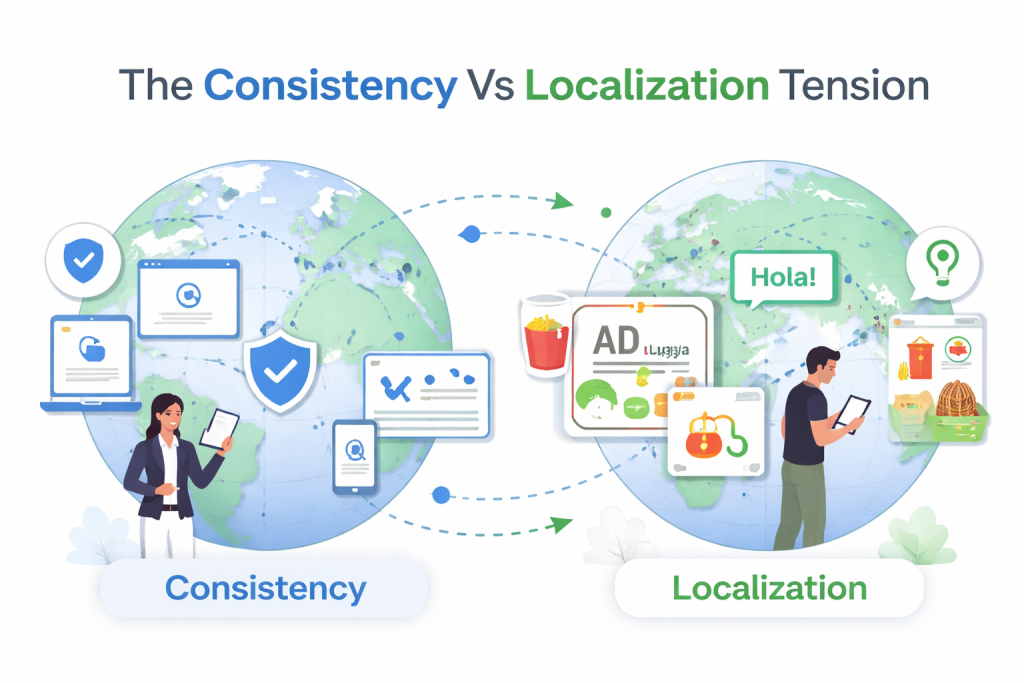
One of the most common challenges global brands face is knowing when to stay consistent and when to adapt. Getting this balance wrong can either dilute the brand or alienate local audiences.
What Should Never Change Across Markets
Certain elements form the backbone of brand recognition and should remain consistent everywhere. These include the logo structure, brand colors, typography rules, visual hierarchy, and core messaging principles. These elements create familiarity and help customers recognize the brand instantly, regardless of location.
Consistency also extends to brand values and tone guidelines. While language may change, the personality of the brand should remain recognizable. A brand that is confident and clear in one market should not suddenly sound casual or vague in another.
Where Localization Actually Matters
Localization goes beyond translation. It involves understanding cultural context, consumer behavior, and market expectations. Colors, symbols, humor, and even layout preferences can carry different meanings across regions.
Legal and regulatory requirements also vary significantly. Marketing claims that are acceptable in one country may be restricted in another. Privacy disclosures, disclaimers, and accessibility standards often need to be adapted at the local level.
Successful international brand management allows teams to localize within defined boundaries. This ensures relevance without compromising the integrity of the brand.
The Hidden Challenges of Managing a Brand Across Borders
Managing a brand internationally introduces complexity that many organizations underestimate. These challenges are not limited to large enterprises. Any company operating in multiple regions will face them over time.
Operational Complexity Across Teams and Time Zones
As brands expand, more people become involved in creating branded content. Marketing teams, sales teams, partners, and regional offices all need access to brand assets. Without centralized systems, teams rely on shared folders, outdated files, or informal handovers.
This fragmentation slows down work and increases the risk of inconsistency. Time zone differences make approvals harder. Updates take longer to reach every team. Small deviations compound into visible brand drift.
Loss of Brand Control at the Local Level
Local teams often act with good intentions. They adapt materials to move faster or better serve their market. Without clear guardrails, these adaptations can gradually move away from brand standards.
Over time, the brand becomes inconsistent across regions. Customers receive mixed signals. Internal teams struggle to identify which version is correct. Brand managers spend more time fixing mistakes than building value.
Legal and Regulatory Risk in Global Branding
Compliance is one of the most overlooked aspects of international brand management. Advertising regulations, data protection laws, and industry specific rules differ widely across countries.
Missing a required disclaimer or using outdated legal language can lead to fines, reputational damage, or loss of trust. Manual compliance checks are difficult to scale and easy to bypass under pressure. This makes compliance a structural problem rather than an individual one.
Why International Brand Management Directly Impacts Revenue
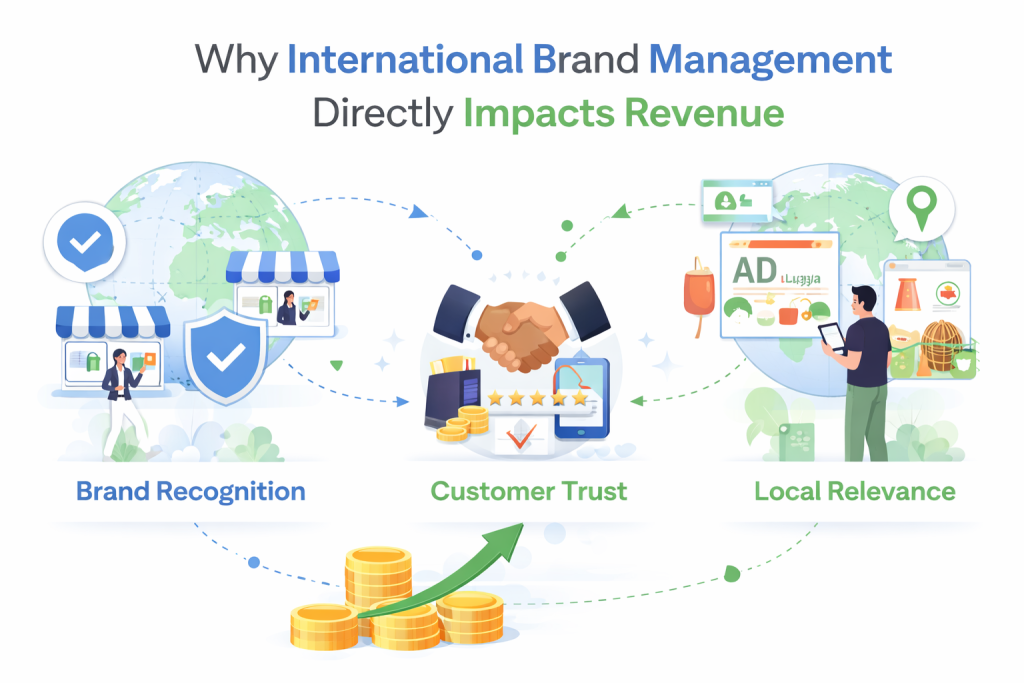
Strong international brand management is not just about protecting identity. It plays a direct role in growth, trust, and financial performance.
Brand Recognition Drives Market Entry Success
When entering a new market, familiarity reduces friction. Customers are more willing to engage with brands they recognize. Consistent branding helps new audiences connect a local presence to a global reputation.
This recognition shortens the trust building phase and accelerates adoption, especially in competitive markets.
Trust Is Built Through Repetition and Reliability
Trust is created when a brand behaves predictably. Consistent visuals, tone, and messaging signal professionalism and reliability. When customers encounter the same brand experience across channels and regions, confidence grows.
Inconsistent branding, on the other hand, creates doubt. Customers question legitimacy and reliability, especially in high value or regulated industries.
Local Relevance Increases Conversion Rates
While consistency builds trust, relevance drives action. Brands that respect local culture, language, and expectations perform better. Localization makes content feel intentional rather than generic.
International brand management enables this balance by giving teams the flexibility to adapt without starting from scratch or risking brand dilution.
How Technology Enables Scalable Global Brand Governance
As brands expand across borders, manual processes quickly reach their limits. Email approvals, shared folders, and static brand guidelines cannot keep up with the speed and complexity of global operations. Technology becomes essential not to replace people, but to support them with structure and clarity.
Why Manual Brand Policing No Longer Works
Relying on individuals to remember brand rules creates friction and inconsistency. People move fast, deadlines are tight, and brand checks are often skipped to get work out the door. Over time, this leads to outdated logos, incorrect messaging, and compliance gaps.
Manual policing also places unnecessary pressure on brand and legal teams. Instead of enabling growth, they become bottlenecks. Scalable international brand management removes the need for constant enforcement by embedding rules directly into how work is done.
The Shift Toward Centralized Brand Systems
Modern global brands operate from a single source of truth. Centralized brand systems store approved assets, templates, and guidelines in one accessible place. This ensures every team works from the same foundation, regardless of location.
Centralization does not mean rigidity. It creates clarity. Teams know where to find the right materials, which versions are current, and how to apply them correctly. This reduces confusion, speeds up execution, and protects brand integrity.
Automation as a Brand Protection Layer
Automation adds an additional layer of safety. Brand rules, formatting standards, and compliance requirements can be built into templates and workflows. Instead of reviewing every output, brands prevent errors before they happen.
This approach allows teams to move faster with confidence. Automation does not limit creativity. It removes repetitive decisions so teams can focus on meaningful work.
Managing Brand Assets Across Regions Without Chaos

Brand assets are the building blocks of brand expression. When assets are mismanaged, even the strongest strategy falls apart.
Creating a Single Source of Truth for Brand Assets
A single source of truth ensures all teams access the same approved logos, visuals, templates, and documents. Without it, teams rely on local copies or outdated files shared informally.
Centralized asset management eliminates version confusion and reduces the risk of off brand materials reaching customers. Whether a presentation is created in Berlin or Singapore, it reflects the same brand identity.
Version Control and Asset Lifecycle Management
Global brands evolve. Logos are refreshed. Messaging is refined. Legal language changes. Without proper version control, outdated assets continue circulating long after they should be retired.
Effective international brand management includes asset lifecycle rules. Expired assets are removed or flagged. New versions replace old ones automatically. Teams always work with current materials without needing reminders.
Enabling Access Without Losing Control
Accessibility is just as important as control. If brand systems are difficult to use, teams will bypass them. Successful systems balance ease of access with governance.
Permissions, roles, and usage rules ensure teams can find what they need while protecting sensitive or regulated assets. This balance encourages adoption and reduces risk.
How to Keep Global Brand Content Compliant
Compliance is not optional in global branding. It is a core responsibility that protects both the brand and its customers.
Embedding Compliance Into Everyday Work
The most effective way to manage compliance is to make it invisible. When legal requirements are embedded into templates and workflows, teams do not need to think about them.
Disclaimers, privacy language, and regulatory notices can be included automatically based on region or document type. This reduces reliance on manual checks and lowers the risk of human error.
Managing Regional Legal Requirements at Scale
Different markets have different rules. Data protection laws, advertising regulations, and industry standards vary widely. Managing these differences manually is difficult and inconsistent.
Centralized compliance systems allow brands to maintain region specific rules while preserving global consistency. Teams create content confidently, knowing it meets local requirements.
Reducing Risk Without Slowing Teams Down
Compliance should not slow progress. When built into systems, it protects speed rather than limiting it. Teams move faster because they no longer wait for approvals or corrections.
This proactive approach protects brand reputation while supporting growth.
Building Brand Systems That Empower Local Teams
Strong international brand management does not restrict local teams. It enables them.
Giving Teams Flexibility Within Clear Guardrails
Local teams understand their markets better than anyone. They need flexibility to adapt messaging, visuals, and formats. Clear guardrails provide structure without micromanagement.
Defined boundaries allow teams to innovate safely. They know which elements are fixed and where customization is encouraged. This builds confidence and ownership.
Aligning Global Strategy With Local Execution
When systems are aligned, global strategy and local execution reinforce each other. Brand leaders focus on vision and direction. Local teams focus on relevance and performance.
This alignment creates consistency that feels natural rather than forced.
What Strong International Brand Management Looks Like in Practice
Well managed global brands share common signals that indicate healthy systems.
Signs Your Global Brand System Is Working
Teams create content faster with fewer revisions. Assets are consistent across markets. Compliance issues decrease. Brand managers focus on strategy instead of correction.
Customers experience a coherent brand that feels familiar and relevant wherever they interact with it.
Warning Signs of a Brand Management Breakdown
Repeated questions about correct assets, inconsistent visuals, and frequent compliance fixes signal deeper issues. These symptoms indicate missing systems, not individual mistakes.
Recognizing these signs early allows brands to course correct before damage accumulates.
How Brandy Supports International Brand Management at Scale

Brandy helps organizations manage their brand as a system rather than a set of files. By centralizing brand assets, guidelines, and usage rules, Brandy gives global teams a clear and reliable foundation.
With structured access, version control, and built in governance, teams can create on brand content confidently while adapting for local needs. Brand leaders maintain oversight without slowing execution. Local teams gain autonomy without risking inconsistency.
Brandy supports international brand management by turning brand rules into everyday workflows. This approach protects brand integrity while enabling growth across markets.
Final Thoughts: Global Brands Win Through Systems Not Guidelines
International brand management is no longer about writing better brand books. It is about building systems that scale with the business.
Brands that succeed globally invest in clarity, structure, and technology. They recognize that consistency and localization are not opposites but partners. With the right systems in place, brands can grow across borders without losing their identity or trust.
FAQs About International Brand Management
International brand management is the practice of maintaining a consistent brand identity across multiple countries while adapting to local markets, cultures, and regulations.
They rely on centralized brand systems, approved templates, and automated governance rather than manual enforcement.
Localization ensures content feels relevant and respectful to local audiences, which increases trust and engagement.
Brand asset management platforms and governance tools help teams stay aligned, compliant, and efficient across markets.