Every successful business has one thing in common: a brand that people remember, trust, and return to. Products may evolve, markets may shift, and competitors may come and go, but a strong brand acts as the steady anchor that keeps a business relevant. This is where brand development comes in.
Brand development is not just about designing a logo or choosing a color palette. It is the deliberate process of shaping how your business is perceived, creating consistent experiences, and preparing your identity to scale as the company grows. Without it, businesses often face a fractured image, with one message on the website, another on social media, and something entirely different in sales conversations. That lack of consistency dilutes trust and makes it harder for customers to connect with you.
As your business expands from startup to scaleup and eventually to an established enterprise, the role of brand development only becomes more critical. A well-planned strategy ensures your brand can adapt to growth without losing its essence. It keeps your identity consistent across new markets, new products, and new customer touchpoints. More importantly, it lays the groundwork for long-term recognition, loyalty, and differentiation in competitive industries.
In this blog, we will explore what brand development really means, why it is essential for business growth, and how you can create a consistent and scalable brand strategy. You will learn the key building blocks, actionable steps, and modern tools that simplify the process so your brand can grow with clarity and confidence.
What Brand Development Really Means
When most people hear the term brand development, they immediately think of visual elements like logos, fonts, and colors. While those are important, brand development goes far deeper. It is the strategic process of shaping how your business is perceived in the minds of your audience and ensuring that perception stays consistent as your company grows.
Unlike short-term campaigns, brand development is a long-term initiative. It focuses on how your brand will evolve over the years, not just how it looks today. A campaign may last a few months, but brand development lays the foundation for everything your business communicates, promises, and delivers for years to come.
It’s also helpful to distinguish between brand development and brand management. Development is about setting direction and shaping your identity for the future. It involves decisions like defining your vision, positioning, and messaging. Management, on the other hand, is the day-to-day execution that ensures teams and partners follow the brand rules consistently. Think of it this way: development draws the map, management makes sure you stay on course.
A strong brand development process ensures that your identity is not only recognizable but also adaptable. Markets change, customer preferences evolve, and new competitors arrive. A well-developed brand is resilient. It can scale with growth, expand into new markets, and still remain authentic and consistent.
Why a Brand Development Strategy Drives Business Growth
A brand development strategy is more than a marketing exercise. It becomes the guiding framework for every decision your business makes, from how you speak to customers to how you expand into new markets. Without it, growth can feel scattered, with inconsistent messaging and a diluted identity. With it, growth becomes structured, purposeful, and recognizable. Here’s why it matters:
Building Lasting Customer Loyalty
Customers don’t become loyal overnight. Loyalty is built through repeated experiences of trust, familiarity, and emotional connection. A strong brand development strategy not only creates brand consistency but also strengthens brand loyalty. Loyal customers return because they recognize your values and believe in your brand promise.
Standing Out in Competitive Markets
No matter your industry, competition is fierce. A great product alone is rarely enough to stand out. Your brand development strategy helps define your brand positioning and unique value proposition. This positioning communicates your key differentiators and ensures potential customers see your business as the preferred choice in a crowded competitive landscape.
Enabling Scalability and Future-Proofing
What works for your brand today may not work five years from now. As businesses grow, they often face challenges like entering new markets, selling products to wider audiences, or adapting messaging for different target markets. A clear strategy allows your brand to evolve while still protecting brand equity and maintaining long-term brand value.
The Core Building Blocks of a Scalable Brand
Every strong brand rests on a solid foundation. Without clear building blocks in place, it’s easy for your identity to become inconsistent or lose direction as your company grows. A scalable brand requires more than good design. It needs structure, clarity, and emotional depth that can guide both internal teams and customer experiences.
Vision and Identity
Your vision is the long-term picture of what your brand aspires to be. Paired with this vision is your brand identity, which should include your mission statement, core values, and company’s culture. Together, these shape your brand personality and make it possible to communicate with a distinct brand voice.
Unified Guidelines for Consistency
Guidelines are the blueprint of brand building. They cover everything from logo usage and color schemes to typography, tone of voice, and brand messaging. Clear documentation ensures your brand image stays consistent across every touchpoint, strengthening brand recognition over time.
Emotional Connection Beyond Visuals
Visual identity matters, but emotional resonance is what makes successful brands unforgettable. Customers remember stories, values, and experiences more than design details. Crafting a brand story that ties back to your brand’s purposeis how you build meaningful customer experiences that last.
Steps to Create a Consistent and Scalable Brand
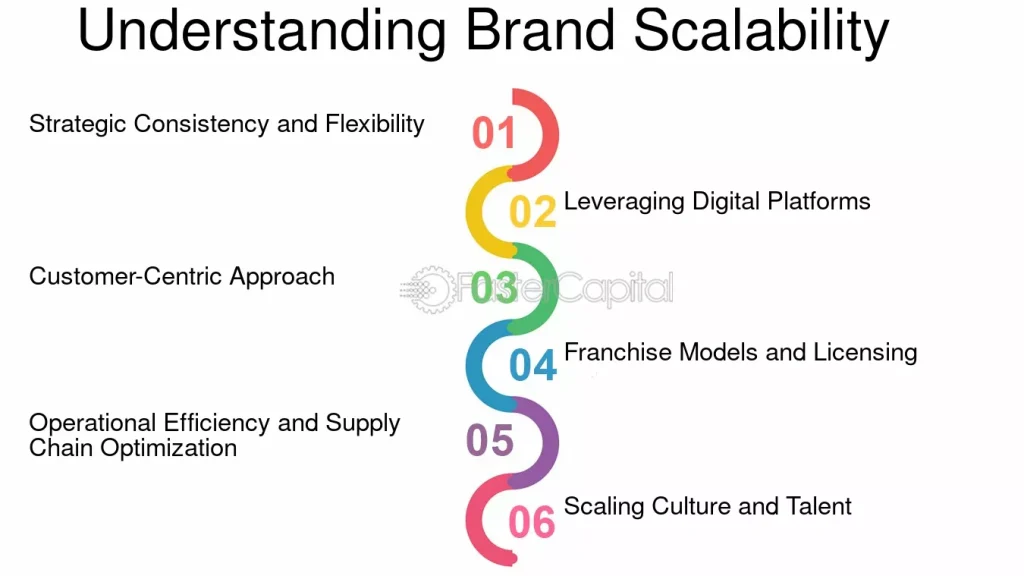
Building a scalable and consistent brand does not happen by accident. It requires a structured approach that balances creativity with strategy. Below are six actionable steps that can guide businesses of any size toward creating a brand that grows with them.
1. Define a Clear Brand Vision and Purpose
Your brand needs more than a product or service to stand on. It needs a reason for existing that resonates with people. Start by articulating a vision of what your company aspires to achieve in the long run and a purpose that reflects the positive change you want to bring to your audience. A clear vision and purpose become the north star that guides all brand decisions.
2. Craft a Unique Value Proposition and Positioning
In crowded markets, brands cannot rely on features alone. Positioning defines where you sit in the minds of your customers compared to competitors. Your value proposition explains why someone should choose you. Together, they establish the distinct space your brand occupies. This clarity ensures that as you grow, customers understand what sets you apart.
3. Build Comprehensive Brand Guidelines
Guidelines are the blueprint of consistency. They define how your brand looks, sounds, and feels across all platforms. This includes logos, color palettes, tone of voice, messaging, and even photography style. Well-documented guidelines empower every team member and partner to represent the brand accurately. They also make scaling smoother, as new markets and channels are added without diluting the identity.
4. Centralize and Organize Brand Assets
Scalability suffers when brand assets are scattered across emails, drives, and folders. By centralizing assets in one hub, everyone from designers to marketers can work from the same updated source. This prevents the use of outdated logos, inconsistent fonts, or off-brand materials. Centralized access keeps teams aligned and speeds up the creative process.
5. Train Teams and Partners for Consistency
Even the strongest brand guidelines fail if people do not follow them. Training is essential to embed brand consistency into daily workflows. Educate teams, onboard new hires with brand workshops, and share practical examples of how to apply the brand in real-world scenarios. Extending this training to external partners ensures your brand shows up consistently across collaborations.
6. Review and Evolve Your Brand Over Time
A brand that never evolves risks becoming irrelevant. Regularly revisit your brand strategy to ensure it reflects changing market conditions, customer expectations, and business goals. This does not mean reinventing the brand every few years, but making thoughtful updates that keep it fresh and aligned with your long-term vision.
Following these six steps helps businesses create a strong foundation for brand consistency while preparing for growth. Each step builds on the last, ensuring that as your company scales, your brand grows stronger instead of weaker.
How Brand Development Fuels Marketing and Communication
A well-developed brand is not just an internal asset. It directly shapes how you market your business and how customers experience it. Marketing campaigns may capture attention, but brand development ensures those campaigns feel authentic and consistent. Together, they create a cycle where marketing strengthens the brand and the brand empowers marketing.
Branding Shapes Your Marketing Voice
Your brand strategy defines the personality of your communication. This makes it easier to create messaging that aligns with your business objectives. For example, a playful, youthful brand should have campaigns that sound fun and casual, while a professional B2B brand might lean into trust and authority.
Visual Consistency Across Channels
From ads to social media posts, consistency in visuals and tone builds familiarity. When paired with a content marketing strategy or even traditional marketing efforts, your strong brand ensures campaigns resonate more effectively with the target audience.
Cohesive Experiences for Customers
Customers interact with your business in multiple ways, from your website to social media platforms. If these touchpoints feel disjointed, trust weakens. A strong strategy connects your marketing messaging to your brand voice, ensuring that every interaction reflects the same core message.
Integration With Marketing Strategy
Marketing without branding risks being short-lived. Branding without marketing risks being invisible. By aligning brand development with marketing strategy, you create a powerful combination where your campaigns amplify the values and identity you’ve worked hard to build. It is not about keeping the two separate, but about weaving them together so that every marketing effort reinforces the brand story.
In essence, brand development provides the clarity and consistency that make marketing campaigns more effective. Marketing then brings that clarity to life, ensuring your brand is seen, felt, and remembered.
Common Mistakes That Weaken Brand Development
Even with the best intentions, many businesses stumble when it comes to brand development. These mistakes often lead to confusion, wasted effort, and missed opportunities to build trust. Recognizing and avoiding them can help keep your brand strong and scalable.
Inconsistent Messaging and Visuals
One of the fastest ways to weaken a brand is by being inconsistent. When your website says one thing, your social media communicates another, and your sales team delivers a different message altogether, customers quickly lose trust. Consistency in both words and visuals is what makes your brand recognizable and reliable.
Lack of Alignment Across Teams
Branding is not just a marketing responsibility. It requires alignment across the entire organization. When different teams interpret the brand in their own way, the customer experience becomes fragmented. Without proper training and access to unified guidelines, internal misalignment can undo the best brand strategies.
Treating Brand Development as a One-Time Project
A brand is not something you “set and forget.” Businesses that treat brand development as a one-off exercise often find themselves outdated or irrelevant after a few years. Continuous evolution and periodic reviews are essential to keep the brand fresh and connected to changing markets.
Ignoring Customer Expectations
Your brand does not exist in isolation. It lives in the minds of your customers. Failing to adapt to evolving preferences, cultural shifts, or industry trends risks making your brand feel out of touch. Listening to feedback and staying responsive ensures the brand remains relevant.
By avoiding these pitfalls, businesses can ensure their brand development efforts create lasting value rather than fading into inconsistency or irrelevance.
Tools and Platforms to Support Brand Development
Building a scalable and consistent brand is not only about strategy. It also requires the right tools to bring that strategy to life. Without proper systems, even the strongest guidelines risk being misused or ignored. Modern platforms make it easier for teams to stay aligned, access updated materials, and apply brand rules without confusion.
Brandy: A Modern Solution for Scalable Brands
Brandy offers an intuitive way to centralize brand guidelines and assets in one accessible link. Instead of digging through endless folders or outdated documents, teams can instantly find and use approved logos, fonts, colors, and templates. By providing one source of truth, Brandy helps businesses scale their brand without sacrificing consistency. It empowers agencies, startups, and global companies alike to showcase their brand identity clearly and professionally.
The right tools act as enablers of brand development. They turn guidelines into practical resources, simplify collaboration, and ensure that consistency is more than an idea. It is a daily practice across your entire organization.
Digital Brand Guidelines
Gone are the days of static PDF brand manuals that get lost in email threads. Digital brand guidelines provide a living, centralized hub where everyone in the company, and even external partners, can access the most up-to-date rules and assets. This ensures that changes are rolled out instantly and no one is stuck working with outdated files.
Asset Management Platforms
Consistency depends on making brand assets easily available. Logos, templates, fonts, and images should not be scattered across drives or personal folders. Centralizing them in an organized platform ensures that teams always have access to the correct versions. This reduces errors, saves time, and helps the brand appear professional and cohesive.
Collaboration Tools
Branding touches every department, from marketing and design to sales and HR. Tools that allow seamless collaboration, feedback, and version control make it easier for teams to work together. The result is faster execution and fewer inconsistencies in brand communication.
Future of Brand Development: Scaling with Technology and Creativity
The way brands are built is evolving faster than ever. What once took months of manual effort can now be streamlined with digital tools and creative technologies. But while technology is reshaping the process, the heart of brand development is authenticity and connection. The future belongs to businesses that know how to balance both.
Technology as an Enabler
AI-powered design, automated content creation, and brand management platforms are making it easier for businesses to scale branding efforts. These tools reduce repetitive tasks, ensure brand guidelines are always accessible, and allow teams to focus on the creative aspects of brand storytelling. Technology does not replace creativity, but it amplifies it by giving teams more time and clarity.
Creativity as a Differentiator
As more companies adopt similar technologies, creativity becomes the true differentiator. A brand’s ability to tell meaningful stories, spark emotions, and connect with people on a human level is what ensures long-term impact. Technology provides efficiency, but creativity provides resonance, and both are needed to build a scalable brand that people remember.
The Shift Toward Living Brands
The future of brand development will also see a move toward “living brands.” These are brands that evolve continuously, adapting their messaging, visuals, and tone in real time to stay relevant. Digital guidelines and asset hubs already make this possible by ensuring updates are instantly shared across teams and markets.
Ultimately, the future of brand development is not about choosing between technology and creativity, but about integrating them. The brands that thrive will be those that use technology to scale while staying rooted in authentic stories and values.
Final Thoughts
Brand development is not a side project. It is the core of how your business is seen, remembered, and trusted. A well-developed brand gives you more than a polished identity. It creates clarity, consistency, and a roadmap for growth. It ensures that as your company scales into new markets, launches new products, or expands its team, your identity remains strong and recognizable.
The key lies in treating brand development as an ongoing journey rather than a one-time exercise. From defining your vision and purpose to centralizing assets and evolving with customer expectations, every step adds resilience to your brand. With the right tools in place, you can make consistency effortless and scalability achievable.
As markets grow more competitive, brands that invest in development will not just survive but thrive. They will build trust faster, stand out more clearly, and create loyal communities that fuel long-term success. If you want your brand to grow without losing its identity, now is the time to focus on strategy, structure, and the systems that support it.
Platforms like Brandy make this process seamless by giving businesses one place to manage and scale their identity. By combining strategy with technology and creativity, you can create a brand that is not only consistent but also built to last.
Your brand is more than what people see. It is the promise you keep, the trust you build, and the story you continue to tell. The sooner you invest in its development, the stronger and more scalable your growth will be.