
Brand Management Blog & Resources
Every strong brand begins with a clear sense of purpose. It is not just about selling a product or service; it is about standing for something meaningful that connects with people on a deeper level. This is where a brand mission comes in.
A brand mission defines why your company exists, what it aims to achieve, and how it plans to make a difference in the world. It is the driving force that shapes your brand’s direction, voice, and everyday actions. When done right, it gives both employees and customers a shared reason to believe in your brand.
Think about the brands you admire most. They are not just known for what they sell but for what they stand for. Nike inspires people to move. Starbucks nurtures human connection. Google organizes the world’s information. Each of these missions fuels everything the company does, from marketing decisions to customer experiences.
In this guide, we will explore what a brand mission is, why it matters, and how to craft one that truly captures your brand’s purpose. We will also look at some of the best mission statement examples from leading companies and share tips on aligning your mission with your brand identity. By the end, you will have the clarity and inspiration to write a mission statement that not only defines your business but also inspires everyone it touches.
What Is a Brand Mission?
A brand mission is the heartbeat of your company. It is a clear statement that explains why your business exists and how it creates value for the people it serves. It defines your brand’s purpose beyond making profits and helps everyone, from customers to employees, understand what your company stands for.
At its core, a brand mission answers three simple questions:
- What does your company do?
- Who does it serve?
- How does it make a positive impact?
A brand mission statement captures these answers in a few concise sentences that inspire both action and emotion. It becomes the foundation for your brand identity, influencing decisions across marketing, design, culture, and customer engagement.
While many brands focus on visuals like logos and colors, it is the mission statement that gives those creative elements meaning. A strong mission brings coherence to your brand story and gives direction to every campaign, product, or message that follows.
For example, Nike’s mission statement, “To bring inspiration and innovation to every athlete in the world,” is more than a catchy line. It expresses their belief in human potential and their commitment to empowering movement in all forms. This mission drives not only their marketing but also their product innovation and social impact initiatives.
A well-written brand mission acts like a compass. It aligns your team around shared goals, helps customers understand your brand purpose, and gives your company a clear sense of direction. Whether you are a startup or a global enterprise, your mission statement is the foundation of everything you build and communicate.
What a Brand Mission Statement Describes
A brand mission statement goes beyond describing what a company sells. It explains the deeper purpose that drives every decision, product, and experience. It shows how the brand contributes to people’s lives and why it exists in the first place.
A clear mission statement defines three essential aspects. First, it outlines what the company does and the kind of value it provides. Second, it identifies who the company serves and what audience it aims to impact. Finally, it reveals how the company plans to make that impact through its actions, culture, and long-term goals.
A well-defined mission statement reflects the brand’s direction and ensures that everyone inside and outside the company moves toward the same purpose. It gives teams clarity on priorities, helps leaders make consistent decisions, and builds trust with customers who share the same values.
For example, IKEA’s mission statement, “To create a better everyday life for many people,” clearly expresses both purpose and impact. It tells us what they do, whom they serve, and how they want to make life easier and more affordable for families everywhere.
When a mission statement is written with intention, it becomes more than words. It becomes a promise. It signals commitment, authenticity, and purpose. Also, it connects emotionally with people who believe in the same ideals and motivates employees to bring that purpose to life every day.
A brand mission is not static. It evolves as a company grows, expands into new markets, and embraces new challenges. Yet its core essence remains the same: to communicate why the company exists and how it seeks to make a positive difference in the world.
Why a Brand Mission Matters

A well-defined brand mission is the foundation that keeps a company grounded, focused, and inspired. It is what gives meaning to the work teams do and builds a bridge between a business and the people it serves. Without a mission, a company might know what it sells but not why it matters.
Creates Internal Alignment
A strong brand mission unites everyone in the organization. It gives employees a shared sense of purpose and helps them see how their roles contribute to the bigger picture. When teams understand why the company exists, they are more motivated to perform their best. The mission shapes company culture, guides hiring decisions, and becomes the standard for everyday choices.
For example, when a team member at Starbucks serves a cup of coffee, they are not just completing a transaction. They are living the mission to inspire and nurture the human spirit, one person and one neighborhood at a time. This shared purpose is what turns ordinary tasks into meaningful experiences.
Strengthens Customer Relationships
Customers today expect more than products. They want to support brands that share their values and make a positive impact on their lives. A clear brand mission helps build that emotional connection. When customers understand what a brand stands for, they feel more confident in supporting it.
Take Nike as an example. Its mission to bring inspiration and innovation to every athlete in the world speaks directly to people’s ambitions and self-belief. This message resonates deeply with anyone who strives for growth, regardless of skill level. It creates loyalty rooted in shared purpose, not just preference.
Guides Long-Term Strategy
A brand mission acts as a compass for decision-making. It ensures that business strategies, campaigns, and innovations all move in the same direction. From product development to marketing tone, every action reflects the company’s reason for being.
When a company faces challenges or new opportunities, its mission serves as the anchor that keeps it focused. It answers the question, “Does this align with who we are and what we believe in?” A brand with a clear mission never loses direction, even in a fast-changing world.
A meaningful mission empowers growth, trust, and consistency. It turns a business into a movement and transforms customers into advocates who believe in what the brand stands for.
Core Elements of a Strong Brand Mission
A brand mission is more than a line that sounds good in marketing material. It is a guiding force that shapes every part of your brand’s identity. The strongest missions are clear, inspiring, and aligned with both company values and customer needs. They serve as a roadmap that keeps a brand consistent and authentic, no matter how much it grows or evolves.
Below are the essential elements that make a brand mission powerful and lasting.
Clarity and Simplicity
A good mission statement is simple enough for anyone to remember and repeat. It clearly communicates what the company does and why it matters. A clear mission removes confusion and makes it easier for teams and customers to connect with your brand.
For instance, LinkedIn’s mission is “To connect the world’s professionals to make them more productive and successful.” It is direct, easy to understand, and perfectly reflects the company’s role in the professional world.
Authenticity
A mission statement should always come from genuine intent. It should mirror what the company truly stands for and how it operates every day. A brand that tries to sound meaningful without real purpose will eventually lose trust. Authenticity makes the mission believable and builds long-term credibility.
Emotional Connection
People connect with emotions before logic. A brand mission that touches the heart will always be remembered. It should inspire people to believe in something greater than the product itself. Whether it is hope, progress, or empowerment, the emotional tone should feel natural and relatable.
Apple’s mission, “To create the best products on earth and to leave the world better than we found it,” resonates emotionally because it ties innovation to responsibility. It reflects both creativity and care, appealing to a global audience.
Values and Ethics
A brand mission must align with core values that define how the company behaves and makes decisions. These values serve as moral anchors that guide actions and maintain integrity. When values and mission work together, they strengthen brand reputation and foster loyalty.
For example, Patagonia’s mission, “We’re in business to save our home planet,” clearly reflects its values of sustainability and environmental protection. It is not just a statement but a commitment woven into every part of its business.
Customer Focus
A strong mission always considers the customer first. It highlights how the brand improves people’s lives, solves real problems, and adds value beyond products or services. When customers see themselves reflected in a mission, they feel more connected and loyal to the brand.
Long-Term Perspective
The mission should be timeless. It must stay relevant as the brand grows, adapts to new trends, or expands into new markets. A long-term perspective ensures that short-term challenges never distract from the bigger purpose.
A powerful brand mission acts as the glue that holds all parts of the company together. It keeps the message consistent, the strategy focused, and the team inspired to move forward with confidence.
Brand Mission vs Vision Statement
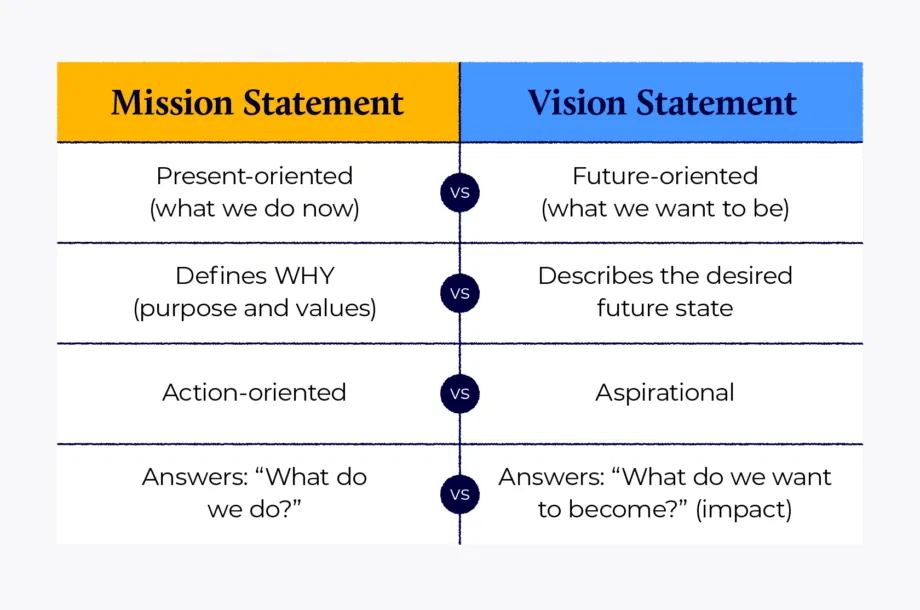
A brand mission and a brand vision are two of the most important pillars of a brand strategy. They often appear side by side, yet each serves a unique role in shaping a company’s identity, purpose, and long-term direction. Understanding the difference between the two helps brands stay focused on both the present and the future.
The Purpose of a Brand Mission Statement
A brand mission statement focuses on the present. It defines what your company does right now, who it serves, and how it creates value in people’s lives. It is the practical expression of your brand’s purpose and shows how that purpose is brought to life every day.
A good mission statement describes what makes a company unique and why it exists beyond financial success. It reflects your core values, brand personality, and commitment to making a positive impact.
For example, the Nike mission statement is “To bring inspiration and innovation to every athlete in the world.” This single line captures what Nike stands for and how it empowers people through its products and messaging. It is simple, emotional, and rooted in action – everything a great mission statement should be.
The Purpose of a Brand Vision Statement
A brand vision statement is more about the future. It paints a picture of what the company aspires to achieve in the long run. While the mission focuses on the present, the vision defines the desired future outcome and the world the company hopes to help create.
Tesla’s vision, “To create the most compelling car company of the 21st century while driving the world’s transition to electric vehicles,” is a perfect example. It describes an inspiring future that guides the company’s innovation and purpose.
A strong company’s vision statement sets the tone for growth and direction. It motivates teams to look ahead and dream bigger while ensuring every step taken today aligns with that future goal.
How Mission and Vision Work Together
A brand mission and vision statement are deeply connected. The mission defines the actions a brand takes to achieve its vision. The vision gives meaning to those actions by setting a higher destination. Together, they ensure that a company not only knows what it is doing but also why it matters.
For instance, Google’s mission, “To organize the world’s information and make it universally accessible and useful,” reflects its focus on improving life today. Its vision to “provide access to the world’s information in one click” points toward a more connected and accessible future. Both statements align perfectly, guiding decisions, design, and innovation across all Google products.
A clearly defined mission and vision create harmony across brand elements. They influence messaging, visual identity, tone of voice, and even company culture. When both statements are aligned, they turn a company’s purpose into a movement that inspires employees, customers, and communities alike.
Brand Mission vs Brand Values
A brand mission and brand values are deeply connected, yet they play different roles in shaping your company’s identity. The mission defines what you do and why you exist, while values define how you do it. Together, they form the moral and strategic foundation that guides your brand’s actions, decisions, and communication.
Understanding Brand Values
Brand values are the core beliefs that influence how your company behaves, communicates, and builds relationships. They represent the principles that your brand refuses to compromise on, no matter how much the company grows or evolves. These values act as the moral compass that keeps the brand consistent and authentic in everything it does.
When your team, partners, and customers understand your values, they know exactly what to expect from your company. It builds trust and helps you attract people who share the same beliefs.
For instance, Patagonia’s commitment to environmental sustainability is one of its strongest brand values. Every decision, from product design to marketing, reflects that dedication. Their mission, “We are in business to save our home planet,” perfectly aligns with their core values and turns their purpose into daily action.
How Mission and Values Work Together
While the mission tells the world what you do, your values explain how you go about doing it. A mission may focus on innovation, accessibility, or creativity, but values give those ideas depth and character. They humanize your brand and help it build emotional connections with customers.
Consider Starbucks. Its mission is “To inspire and nurture the human spirit, one person, one cup, and one neighborhood at a time.” The company’s values such as inclusion, respect, and responsibility bring that mission to life in every customer interaction. They ensure that each cup of coffee serves a greater purpose beyond the beverage itself.
Why Alignment Matters
When brand mission and values are perfectly aligned, the company’s purpose feels authentic and trustworthy. Misalignment, however, can create confusion or skepticism. For example, if a brand claims to care about sustainability but engages in wasteful practices, it undermines its mission entirely.
Strong alignment ensures that the brand story, visual identity, customer experience, and company culture all communicate the same message. It creates a sense of unity and trust that both employees and customers can believe in.
Your brand mission is the promise you make. Your values are the principles that make you keep it. Together, they form the heart of your brand and shape how it is remembered in the minds of your audience.
How to Write a Brand Mission Statement
Writing a brand mission statement may sound simple, but crafting one that captures your company’s true purpose requires reflection and clarity. A mission statement is not a slogan or marketing phrase. It is a few concise sentences that describe what your company does, who it serves, and how it makes a difference in the world.
A clearly written mission statement gives your brand focus, consistency, and emotional depth. Here’s how you can create one that feels both authentic and powerful.
1. Define Your Purpose
Start by identifying why your company exists. What inspired its creation? What problems does it solve for people or the planet? This purpose forms the foundation of your mission. A meaningful mission grows from real motivation, not from trends or buzzwords.
For example, Google’s mission is “To organize the world’s information and make it universally accessible and useful.” It communicates both the purpose and the impact in one simple idea.
2. Identify Your Audience
A strong mission statement always considers the people it serves. Ask yourself who benefits most from what your brand offers. Whether your customers are individuals, teams, or communities, your mission should speak directly to them.
LinkedIn’s mission, “To connect the world’s professionals to make them more productive and successful,” clearly identifies its audience and goal. It tells exactly who they serve and how they add value to their lives.
3. Clarify What You Offer
Your mission statement should communicate what your brand does, not just what it believes in. It should describe the products, services, or experiences your company creates to fulfill its purpose. Avoid general terms like “innovation” or “excellence” unless they directly tie into what your company actually delivers.
Think of your mission as a promise of value. If your brand aims to improve everyday life, describe what actions make that possible. Be specific about the results customers can expect from you.
4. Highlight Your Core Values
Every brand mission should reflect the company’s values. Values such as honesty, creativity, sustainability, or inclusivity make your mission believable. When people read your mission, they should sense the spirit and culture behind it.
If your company values teamwork, your mission might emphasize collaboration. If it values customer well-being, your mission might focus on positive outcomes. Let your beliefs shape your words naturally.
5. Keep It Concise and Clear
A mission statement should be short enough to remember but meaningful enough to inspire. Aim for a few concise sentences that your team and customers can easily repeat. Avoid jargon and complex wording. The simpler it sounds, the stronger it feels.
6. Reflect and Refine
Once you draft your mission statement, share it with your team. Ask if it feels authentic, clear, and inspiring. If it does not, revise it until it captures your brand’s essence. A mission should feel real to those who represent the brand every day.
You can also test your statement with a few trusted customers. If they understand and connect with it, you are on the right track.
7. Live by Your Mission
The mission statement should not just appear on your website. It must guide daily decisions, marketing efforts, and customer interactions. Every product, message, and campaign should reflect that mission in action.
When a brand’s mission becomes part of its everyday behavior, it builds trust and loyalty that last. The most successful brands are not the ones with the cleverest statements but the ones that live their mission consistently.
Characteristics of a Good Mission Statement
A good mission statement captures the essence of a company in a few simple sentences. It is authentic, memorable, and relevant to both employees and customers. While there is no single formula for writing one, the strongest mission statements share a few common characteristics that make them stand out and stay meaningful over time.
1. Clear and Focused
A good mission statement leaves no room for confusion. It should clearly state what the company does, who it serves, and why it matters. Clarity makes it easier for people to connect with your purpose and repeat it with confidence.
When a mission statement is too broad or filled with abstract terms, it loses impact. Simplicity helps everyone in the organization stay aligned and focused on what truly defines the brand.
2. Action-Oriented
The mission should inspire action. It is not only about what a brand believes in but also what it does to make that belief real. The best missions use active language that encourages progress and commitment.
For example, Nike’s mission, “To bring inspiration and innovation to every athlete in the world,” is full of action. It motivates both employees and customers to pursue excellence and live that mission every day.
3. Authentic and Honest
Authenticity is one of the strongest signs of a trustworthy mission statement. It should reflect what the company genuinely stands for and what it practices daily. A brand that says one thing but does another quickly loses credibility.
A mission grounded in truth feels natural and consistent. It attracts loyal customers and employees who believe in the same values and goals.
4. Emotionally Engaging
A mission statement should make people feel something. It might inspire hope, creativity, belonging, or pride. Emotion helps transform a simple statement into a lasting message that people remember and repeat.
Starbucks, for instance, connects emotion with purpose in its mission: “To inspire and nurture the human spirit, one person, one cup, and one neighborhood at a time.” It creates an instant sense of warmth and connection.
5. Timeless and Flexible
A strong mission stands the test of time. It should be broad enough to grow with the company yet specific enough to stay relevant. As industries evolve, the mission continues to guide the brand’s direction without losing its essence.
Apple’s mission, “To create the best products on earth and to leave the world better than we found it,” remains powerful even as the company expands into new categories. Its timelessness makes it adaptable and enduring.
6. Connected to Core Values
A mission statement should reflect the company’s values. If integrity, inclusivity, or sustainability define your brand, they should appear naturally within your mission. This connection keeps your messaging consistent across all brand elements.
A good mission statement is more than words on a page. It is a living reflection of the company’s identity, purpose, and values. It gives direction to your team, meaning to your marketing, and inspiration to your audience.
Real Brand Mission Statement Examples
The best way to understand what makes a strong brand mission is to look at how some of the world’s most successful companies express theirs. Each of these examples captures a clear purpose, reflects company values, and communicates a meaningful commitment to their audience. These statements are not just words; they guide daily actions and shape company culture.
1. Nike

Mission Statement: “To bring inspiration and innovation to every athlete in the world.”
Nike’s mission is short yet powerful. It communicates both purpose and inclusivity. The phrase “every athlete” reflects the idea that anyone with a body is an athlete, making the mission feel personal and empowering. It drives product design, storytelling, and the brand’s larger commitment to encouraging movement and confidence worldwide.
2. Google

Mission Statement: “To organize the world’s information and make it universally accessible and useful.”
This mission defines what Google does and why it matters. It emphasizes accessibility, clarity, and value. The statement has guided Google’s growth from a search engine into a global technology leader. Every product, from Maps to Gmail, connects back to this simple but ambitious purpose.
3. Starbucks

Mission Statement: “To inspire and nurture the human spirit, one person, one cup, and one neighborhood at a time.”
Starbucks focuses on emotional connection and community. The mission describes how it creates experiences that go beyond coffee. It reflects the company’s belief in small, meaningful moments that contribute to a greater sense of belonging.
4. IKEA

Mission Statement: “To create a better everyday life for many people.”
IKEA’s mission captures its focus on affordability, design, and practicality. It highlights how the company improves lives through accessible, functional products. The words “many people” emphasize inclusion and the company’s goal to serve a broad global audience.
5. Patagonia

Mission Statement: “We are in business to save our home planet.”
Patagonia’s mission stands out for its clarity and moral depth. It ties the company’s existence to environmental activism, making sustainability a driving force in every part of the brand. This statement is both a declaration and a responsibility that shapes product design, materials, and community involvement.
6. LinkedIn

Mission Statement: “To connect the world’s professionals to make them more productive and successful.”
LinkedIn’s mission describes exactly what it does and who it serves. It focuses on connection, growth, and empowerment, which are central to its platform. The clarity of this mission helps guide every feature and initiative the company launches for the global workforce.
7. Microsoft

Mission Statement: “To empower every person and every organization on the planet to achieve more.”
Microsoft’s mission is broad yet inspiring. It conveys a vision of inclusivity and progress, showing that technology can uplift people and businesses worldwide. It gives direction to all of Microsoft’s innovations while reinforcing its belief in human potential.
8. Airbnb

Mission Statement: “To create a world where anyone can belong anywhere.”
Airbnb’s mission focuses on belonging, trust, and connection. It reflects a human need for community and shared experiences, turning hospitality into something more meaningful. This statement has become the backbone of the brand’s storytelling and design philosophy.
Why These Missions Work
All of these missions share one thing in common: clarity. They explain what the company does, who it serves, and why it exists in a way that anyone can understand. Each statement connects emotion with action, and that balance is what makes them memorable.
A good mission statement should never sound forced or overly ambitious. It should sound like something that could guide real decisions and inspire real people. These brands prove that when a mission is genuine, it becomes a magnet for loyalty, trust, and long-term success.
The Role of Mission in Brand Identity
A brand mission is not just a statement that lives on a website. It is the foundation of a brand’s identity and the source of meaning behind every visual, message, and customer experience. Without a clear mission, even the most beautiful logo or polished campaign can feel empty.
A strong mission gives life to all other brand elements such as tone of voice, color palette, typography, and storytelling. It ensures that everything a company creates feels consistent and purposeful. When people encounter your brand, the mission helps them understand what you stand for and why you exist.
Mission Shapes the Brand Voice
Your brand voice is how you speak to the world. Whether it is confident, caring, or playful, that tone should come from your mission. A company that aims to empower people will naturally sound inspiring. A company that values sustainability may adopt a thoughtful and educational tone.
When your voice aligns with your mission, communication becomes authentic. Every message feels genuine because it reflects your deeper purpose.
Mission Brings Consistency Across Platforms
Consistency is one of the strongest signs of a trusted brand. A mission-centered identity ensures that your visuals, language, and actions all tell the same story. Whether it is a social media post, an ad campaign, or a customer support message, everything connects back to the same values and goals.
For instance, Google’s mission to make information universally accessible influences its entire ecosystem. From its clean design to its simple language, every product reflects that purpose. This unity builds trust and makes Google instantly recognizable.
Mission Strengthens Emotional Connection
When a brand’s identity reflects its mission, it becomes easier for people to form emotional bonds. Customers start to see the brand as more than a company; they see it as something that shares their beliefs. This emotional connection leads to loyalty that lasts longer than any marketing trend.
A clear mission also inspires employees to represent the brand proudly. It creates a sense of belonging within the team, which in turn strengthens how the brand is represented to the outside world.
In simple terms, your mission is the soul of your brand identity. It gives meaning to the visuals people see, the words they hear, and the feelings they associate with your company. When every part of your identity reflects your mission, you create a brand that feels alive, purposeful, and unforgettable.
Common Mistakes When Creating a Brand Mission
Writing a brand mission statement requires more than creativity. It takes honesty, clarity, and purpose. Many companies struggle because they try to sound inspiring without staying true to who they are. A mission statement should reflect your company’s identity, not an idealized version of it. Below are the most common mistakes that weaken even the best intentions.
1. Being Too Vague
A clearly defined mission statement should explain exactly what your company does, how it does it, and why it exists. When a mission sounds too broad or generic, it becomes forgettable. Words like “excellence” or “innovation” mean little unless they connect to a specific purpose.
A great mission statement avoids empty promises and focuses on clear, actionable goals that people can understand and believe in.
2. Focusing Only on Profit
The mission should never revolve around making money. While financial growth is important, it is not the reason a brand exists. A company’s mission should describe its commitment to customers, employees, and the broader community. When a mission focuses only on revenue, it loses authenticity and emotional impact.
The Nike mission statement is a perfect example of balance. It does not mention sales or profits. Instead, it focuses on bringing inspiration and innovation to every athlete, reflecting a higher purpose that naturally supports business success.
3. Ignoring the Target Audience
A mission that does not consider its target audience will struggle to connect emotionally. The mission should reflect who the company serves and how it adds value to their lives. It is not just about what you do; it is about the people you do it for.
Starbucks demonstrates this perfectly. Its mission, “To inspire and nurture the human spirit, one person, one cup, and one neighborhood at a time,” speaks directly to the everyday customer and emphasizes community and care.
4. Forgetting Core Values
A brand mission should mirror the company’s core values. When there is a gap between what the mission says and what the company actually does, people notice. This disconnect can damage credibility and weaken trust.
A good mission statement reflects the culture, ethics, and priorities that guide daily decisions. If your company values sustainability or creativity, those themes should naturally appear in your mission.
5. Trying to Please Everyone
A mission that tries to appeal to everyone usually appeals to no one. It is better to focus on what truly sets your company apart and who you want to serve. The mission should feel personal, not universal.
For example, Google’s mission, “To organize the world’s information and make it universally accessible and useful,” works because it is specific to Google’s role and purpose. It does not attempt to be everything to everyone, but it has global relevance because of its clarity.
6. Treating the Mission as a Marketing Line
A mission statement is not a slogan. It is a guiding principle that should influence company culture, operations, and decision-making. When treated as a piece of marketing copy, it loses its depth and long-term value.
The mission should shape hiring practices, customer experiences, and brand strategy. It should guide real action, not just appear in promotional materials.
7. Failing to Evolve with the Company
As a company grows, its mission may need refinement. While the core purpose often remains the same, the language or scope may evolve. Failing to revisit your mission can make it feel outdated or disconnected from your brand’s direction.
A good example is Microsoft. Its early mission focused on putting a computer on every desk. Today, it has evolved to “Empower every person and every organization on the planet to achieve more.” The essence of accessibility remains, but the vision has expanded with technology and time.
Creating a strong mission statement requires reflection, honesty, and alignment between purpose and practice. When written with care, it becomes the foundation for a lasting brand story that inspires both customers and employees.
How Brandy Supports Purpose Driven Brands
A clear brand mission is powerful, but it becomes even stronger when it is supported by the right tools. Brandy helps purpose driven companies bring their mission to life by keeping every brand asset, message, and visual element aligned under one unified system. It transforms how teams collaborate and ensures that a company’s purpose stays visible in everything it creates.
With Brand Spaces, businesses can organize and showcase their mission, values, and identity in one easily accessible place. Each space becomes a living representation of what the brand stands for, allowing every team member or partner to stay aligned with the company’s vision and tone.
Through Collections, Brandy allows you to categorize essential brand assets such as logos, color palettes, images, and typography. These collections help ensure that every piece of communication reflects the same message and emotional impact that the mission represents.
Brandy’s Shareable Brand Links make collaboration seamless by giving stakeholders instant access to approved assets. This eliminates confusion, prevents outdated materials from being used, and reinforces a unified brand presence across all platforms.
By centralizing brand elements and maintaining clarity across teams, Brandy ensures that your brand mission is not just written but lived every day. It helps your company stay consistent, focused, and true to its purpose while scaling its presence confidently in a fast moving world.
Final Thought
A brand mission is more than a line on your website. It is the foundation that gives purpose to everything your company does. It connects your products, people, and principles into one unified story that customers can believe in. A well-crafted mission brings clarity to your brand’s direction, strengthens emotional connection, and ensures that every action reflects your company’s true purpose.
The most successful brands in the world have one thing in common. They live their mission every day. From Google’s goal to make information universally accessible to Nike’s promise to bring inspiration to every athlete, these missions are not marketing phrases. They are commitments that shape brand identity, guide strategy, and build long-term trust.
Your mission is your brand’s heartbeat. When it aligns with your values, inspires your team, and speaks directly to your audience, it becomes the most powerful tool in your entire brand strategy. Define it clearly, communicate it consistently, and let it remind the world why your company exists and why it matters.