
Every successful brand begins with a clear purpose, a unique identity, and the promise of a memorable brand experience. But as the company grows, new teams join, products evolve, and strategies shift, this clarity often fades. What once felt like a united voice can slowly turn into scattered messaging, inconsistent visuals, and confused brand perception.
A strong brand isn’t just a logo or a color palette; it’s the sum of every interaction your audience has with your business. From how your brand communicates online to how your employees represent it offline, every detail shapes the overall brand image.
Yet even the most established organizations face common brand problems that threaten consistency and trust. Weak brand management, disjointed brand assets, unclear brand guidelines, and lack of alignment between teams can cause serious branding issues.
Understanding these challenges is the first step toward fixing them. In this guide, we’ll break down the most common branding problems companies face, why they happen, and how to solve them with smarter brand strategy, stronger collaboration, and the right tools for modern brand management.
Weak Brand Identity and Inconsistent Messaging
A strong brand identity isn’t just about design; it’s about clarity and consistency. When your visuals and voice don’t align, even loyal customers can lose trust and connection.
Problem: Confused Customers, Confused Brand
One of the most common brand problems businesses face is a weak or inconsistent brand identity. When your messaging, tone, and visuals aren’t aligned, customers struggle to understand what your brand truly stands for. You might have multiple logo variations floating around, teams using different fonts or color palettes, or a tone of voice that shifts depending on who’s writing. These inconsistencies make your brand look unorganized and unreliable.
Many organizations underestimate how much damage even small inconsistencies can do. Imagine visiting a company’s website with one logo, downloading a brochure with a slightly altered version, and receiving an email that sounds like a different brand altogether. The lack of alignment erodes trust and recognition, making it harder for customers to remember or connect with you.
When teams create visuals or copy independently, without clear guidance, the result is a fractured brand image. Over time, this inconsistency affects not just perception but performance.
Solution: Build Consistency Through Brand Guidelines and Tools
The solution starts with clarity. Develop comprehensive brand guidelines that define your brand’s logo usage, colors, fonts, tone, and voice. Make these guidelines accessible to every employee, not just designers or marketers.
To simplify alignment, use a digital brand management platform like Brandy. It centralizes all approved assets, including logos, templates, visuals, and messaging, in one place. This ensures every touchpoint, from social posts to presentations, reflects the same identity. When your visuals and messaging stay consistent, your brand becomes recognizable, credible, and ultimately more profitable.
Employees Not Living the Brand
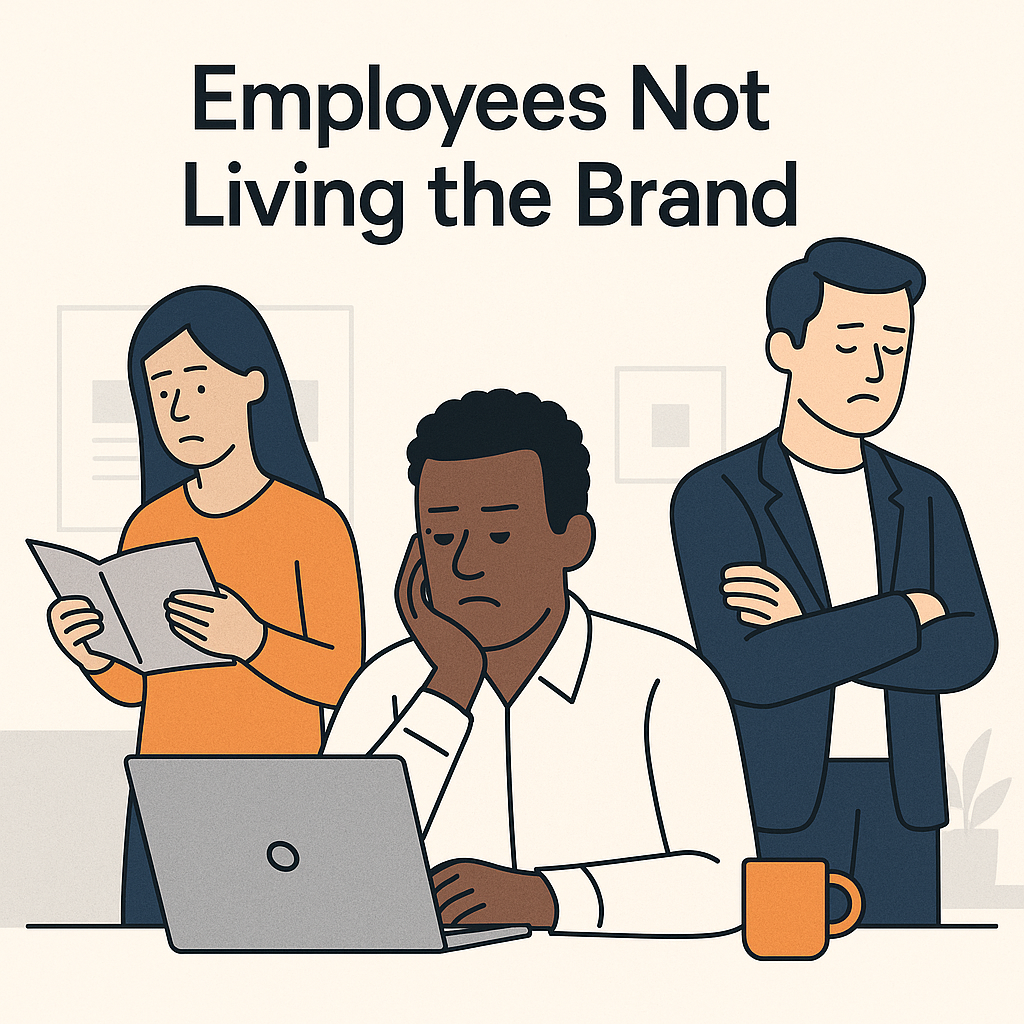
A brand’s real strength comes from within. When employees understand, believe in, and reflect the brand’s values, they turn every interaction into a powerful expression of what the company stands for.
Problem: Disconnected Teams and Uninspired Culture
One of the most overlooked brand problems lies within the organization itself: employees who don’t live the brand. When teams don’t understand or believe in the company’s mission, values, or visual identity, it creates a silent disconnect between what the brand says and how it behaves. You can have a stunning logo, a perfect tone of voice, and a great marketing campaign, but if your employees aren’t aligned, the message feels hollow.
A disengaged team leads to inconsistent brand experiences. Sales may promise one thing while customer support delivers another. Internal documents may use old visuals or outdated taglines. The lack of shared purpose results in mixed communication that customers notice immediately.
When employees don’t see themselves as part of the brand story, they’re less motivated to protect, represent, or evolve it. This weakens the foundation of brand trust and credibility.
Solution: Empower Teams to Become Brand Ambassadors
The solution begins with inclusion and communication. Every employee should understand what the brand stands for and how their role supports it. Encourage participation through brand storytelling sessions, internal workshops, and open feedback systems.
Recognize employees who actively embody brand values and make them visible champions of your culture. Transparency, acknowledgment, and consistent leadership communication go a long way in driving engagement.
Using a platform like Brandy helps reinforce this culture. By centralizing brand assets, guidelines, and values in one place, employees can easily access everything they need to stay aligned. When teams feel connected to the brand, they don’t just work for it; they live it.
Siloed Teams and Poor Collaboration
Disconnected teams often create disconnected brands. When departments don’t communicate or share resources, each one develops its own version of the brand, leading to confusion, duplication, and inconsistency across every customer touchpoint.
Problem: Fragmented Workflows and Brand Disconnect
When teams work in isolation, brand consistency quickly falls apart. Each department develops its own materials, tone, and priorities without visibility into what others are doing. The marketing team may launch a campaign that the sales team isn’t fully aware of, or design may create assets that don’t align with updated messaging. These silos create a disjointed brand experience where every touchpoint feels slightly different.
According to Forrester B2B Brand & Communications Survey, only 31% of B2B companies run an annual brand tracker, and just 30% believe they can effectively measure how brand impacts demand or sales. The lack of communication and shared tools leads to confusion, duplicated work, and off-brand content. Instead of one unified message, the brand becomes a collection of mismatched efforts.
Siloed work doesn’t just affect external perception; it also frustrates employees. Without a clear feedback loop or shared system, teams lose valuable time searching for the right files or waiting for approvals. This slows productivity and weakens brand momentum.
Solution: Create a Culture of Collaboration and Shared Ownership
Breaking silos starts with visibility and access. Teams should be able to find, share, and contribute to brand materials without friction. Centralized communication and collaboration systems are essential to achieving this.
Platforms like Brandy remove the confusion caused by scattered brand files by providing a single, organized space where every department can store, access, and manage assets. Teams can share updates, leave feedback, and stay informed about current guidelines, making collaboration smooth and transparent.
Additionally, foster cross-department brainstorming sessions and internal updates to keep everyone aligned on the brand’s direction. When all teams share the same purpose and tools, your brand becomes stronger, more cohesive, and ready to deliver a consistent experience across every channel.
Short-Term Thinking Over Long-Term Brand Equity
Focusing only on short-term wins can harm long-term success. When brands chase quick results instead of building trust and consistency, they lose the stability and recognition that make them valuable over time.
Problem: Quick Wins That Hurt Brand Value
Many companies fall into the trap of chasing short-term gains at the expense of long-term brand strength. They prioritize quick sales, viral campaigns, or short-lived discounts to hit quarterly targets, but in doing so, they often dilute their brand message and weaken customer trust. When every decision revolves around immediate profit, there’s little room for nurturing loyalty or sustaining recognition.
Frequent rebranding, inconsistent messaging, or abrupt product pivots are clear symptoms of short-term thinking. These quick shifts confuse customers, making it harder for them to connect emotionally with the brand. Over time, it erodes the authenticity and stability that strong brands are built on.
Rather than using an unverified figure, here’s a better-supported insight: Forrester describes brand building as a long game, emphasizing that consistent investments over time yield compounding returns and long-term value.h.
Short-term tactics may boost visibility temporarily, but without a consistent narrative, the brand loses direction. Customers remember how a brand makes them feel, not how often it changes to chase trends.
Solution: Build for Longevity Through Strategic Brand Management
The key to sustainable growth lies in balancing performance marketing with brand-building efforts. Develop a long-term brand roadmap that clearly defines your mission, tone, and values, then make sure every campaign aligns with these principles.
Focus on storytelling, consistency, and experiences that strengthen your emotional connection with customers. Track metrics that go beyond sales such as customer sentiment, recognition, and brand recall.
A platform like Brandy helps maintain this alignment over time by keeping all brand guidelines, templates, and creative assets in one accessible place. This allows teams to stay focused on a unified vision even as campaigns evolve. A brand built on long-term thinking becomes more resilient, recognizable, and trusted, qualities no short-term tactic can replace.
Failure to Differentiate from Competitors
When a brand looks and sounds like everyone else, it fades into the background. True differentiation comes from clarity, knowing what makes your brand unique and communicating it with confidence at every touchpoint.
Problem: Blending In Instead of Standing Out
In saturated markets, many brands struggle because they look, sound, and feel just like everyone else. They chase trends, mimic competitor messaging, or rely too heavily on industry clichés. The result? A brand that fails to capture attention or build emotional connection. When your audience can’t distinguish you from your competitors, your value becomes negotiable, and often, the only differentiator left is price.
This problem often stems from unclear positioning or lack of a distinct brand voice. Teams may focus too much on product features instead of the emotional benefits or story that sets the brand apart. According to Lippincott’s data, only 5 % of brands are considered unique by consumers, showing how rare true differentiation has become.
Without differentiation, even great products struggle to gain traction. A strong brand needs to own a specific idea or feeling in the customer’s mind, something competitors can’t easily replicate.
Solution: Define What Makes Your Brand Truly Unique
To stand out, start by revisiting your brand positioning. Ask fundamental questions: What problem do we solve better than anyone else? Why do customers choose us and stay with us? What values drive our decisions?
Develop a messaging framework that communicates these answers consistently across every channel. Instead of competing on price or features, focus on the emotional connection your brand creates. Brands that stand for something meaningful, like transparency, innovation, or sustainability, build stronger loyalty over time.
Using Brandy can help document and distribute your positioning statements, tone guidelines, and storytelling assets across teams. When everyone communicates the same unique message, your brand naturally separates itself from the noise. True differentiation isn’t about being louder; it’s about being unmistakably you.
Poor Brand Governance and Lack of Control
Without proper brand governance, consistency quickly slips away. When teams use outdated or unauthorized materials, your brand’s image weakens, making it harder to maintain trust, control, and a unified identity across every channel.
Problem: Brand Chaos and Unchecked Assets
Without proper brand governance, even the most recognizable brands can lose control of their identity. When there’s no system or clear process for managing who uses what, brand assets end up scattered across folders, drives, and inboxes. Teams start creating their own versions of logos, slide templates, or visuals, each slightly different from the original. Over time, this patchwork of inconsistent materials erodes brand integrity and customer trust.
The lack of oversight also leads to compliance risks. Outdated assets or unauthorized versions can find their way into public materials, creating confusion or even legal issues. Without proper systems in place, teams start creating their own versions of logos, slide templates, or visuals, each slightly different from the original. Over time, this patchwork of inconsistent materials erodes brand integrity and customer trust.
According to Content Marketing Institute’s 2025 Enterprise Content Marketing research, 61% of enterprise marketers cite communication across organizational silos as a major non-creation challenge, highlighting how internal alignment, asset workflows, and approval processes remain bottlenecks.
When there’s no central control, every department becomes its own brand manager. Instead of one unified brand, you end up with many competing versions, none of which tell the same story.
Solution: Strengthen Oversight with Centralized Brand Management
The solution begins with structure. Implement clear brand governance policies that define how assets are created, approved, and distributed. Assign ownership to a dedicated brand management team responsible for maintaining version control and reviewing updates.
Adopting a centralized brand management platform like Brandy ensures all brand materials, including logos, fonts, templates, and visual assets, are stored in one secure, accessible hub. Built-in permission settings let you control who can edit or download assets, ensuring every file used aligns with brand standards.
Regular audits of brand materials help keep everything current and compliant. When governance is strong, your brand remains consistent, trustworthy, and protected across every platform and campaign.
Ignoring Brand Evolution and Market Shifts
Brands that resist change risk being left behind. As markets, audiences, and trends evolve, a brand must adapt while staying true to its core values to remain relevant and connected to its customers.
Problem: Outdated Identity in a Changing Market
Even the strongest brands can lose relevance if they fail to evolve with time. The world moves fast; consumer expectations, design trends, and communication styles are constantly changing. When a brand stays static for too long, it risks appearing outdated or disconnected from its audience. What once felt modern and distinctive can suddenly look tired next to agile competitors that adapt faster.
This problem often begins with a lack of awareness or resistance to change. Teams may hold onto legacy visuals, tone, or strategies out of comfort or fear of alienating existing customers. But staying still while the market moves forward is one of the biggest branding mistakes a company can make.
The signs are easy to spot: declining engagement, irrelevant messaging, or visuals that feel out of step with cultural trends. When a brand stops evolving, customers stop noticing, and competitors quickly step in to fill the space.
Solution: Refresh, Realign, and Reconnect
A brand evolution doesn’t always mean a full rebrand. Sometimes it’s about refining your visuals, updating your tone, or introducing new experiences that align with changing customer needs. Start with a brand audit to identify what feels outdated or inconsistent with your current strategy.
Encourage regular feedback from employees, customers, and partners to understand how your brand is perceived today. Use those insights to adjust your messaging and design elements thoughtfully, without losing your core identity.
Tools like Brandy make this process seamless by keeping every asset versioned and accessible. Teams can collaborate on updates, share new guidelines instantly, and ensure that everyone applies the refreshed look consistently. By treating evolution as an ongoing practice, your brand stays relevant, adaptable, and connected to its audience.
Lack of Brand Measurement and Insights
You can’t improve what you don’t measure. Without tracking brand performance and perception, businesses miss crucial insights that guide better decisions and long-term growth.
Problem: Making Decisions Without Data
Many companies invest heavily in branding but fail to measure how their efforts perform. They launch campaigns, refresh visuals, or redesign websites without tracking how these changes affect brand perception, recognition, or engagement. Without measurement, brand management becomes guesswork, and decisions are based on opinion rather than evidence.
This blind spot leads to wasted resources and missed opportunities. Brands may continue with strategies that no longer resonate or overlook areas where small improvements could drive big gains.
Without data-driven insights, leadership struggles to justify branding investments, and teams can’t clearly see what’s working or what’s not. Over time, this lack of clarity weakens accountability, alignment, and growth.
Solution: Measure, Analyze, and Optimize Your Brand
The first step toward improvement is measurement. Define clear brand KPIs such as awareness, consistency, sentiment, and engagement to understand how your brand performs across channels. Use surveys, analytics tools, and social listening to gather both qualitative and quantitative feedback.
Centralize these insights in a brand management platform like Brandy, where teams can track asset usage, monitor consistency, and view engagement data. This helps identify which visuals, messages, or campaigns resonate most with your audience.
Regularly reviewing these metrics empowers your team to make smarter, data-informed decisions that strengthen your brand over time. When you combine creativity with analytics, your brand doesn’t just look good, it performs with purpose and precision.
How Brandy Helps Fix These Brand Problems

Every strong brand needs structure, clarity, and easy access to the right materials. That’s exactly what Brandy provides. It brings everything that defines your brand, including logos, colors, fonts, guidelines, and messaging, into one clean and organized space where teams can find what they need without confusion or delay.
Instead of searching through folders or asking different departments for the latest files, Brandy gives everyone a single place to access approved assets. This keeps visuals and messaging consistent across every campaign, presentation, or social post. Whether it’s the marketing team preparing content or the sales team creating client decks, everyone uses the same up-to-date materials.
Brandy also helps teams work better together. Brand updates, feedback, and sharing can happen directly within the platform, keeping communication smooth and transparent. With permission controls, version history, and easy sharing links, you maintain control over how your brand is used without slowing down creative work.
By simplifying access, improving collaboration, and keeping every brand element consistent, Brandy removes the common issues that weaken identity and trust. It helps brands stay clear, connected, and confident so every project, big or small, reflects one unified story.
Final Thoughts: Building a Resilient Brand
A resilient brand isn’t built overnight; it’s shaped through consistent effort, clear communication, and a strong connection between teams and customers. Every part of the business, from leadership to design, plays a role in maintaining that connection. When people inside the company understand and live the brand, it naturally shows in every product, message, and experience that reaches the audience.
The key to long-term brand strength is balance. Brands that evolve with time but stay true to their core values remain relevant and trusted. Consistency doesn’t mean rigidity; it means having a clear foundation that guides how you adapt to change.
By identifying common brand problems early, such as inconsistent messaging, weak collaboration, or lack of governance, you can prevent small issues from becoming major obstacles. With the right strategy, structure, and tools in place, your brand stays organized, focused, and recognizable no matter how big your business grows.
A strong brand isn’t defined by how it looks but by how it’s experienced. When every team works together, guided by a shared purpose and the right systems, your brand becomes more than a name; it becomes something people believe in and remember.