
A brand is not built by uploading a logo and posting consistently on social media. It takes research, a clear understanding of the audience, and enough discipline to keep every asset aligned once multiple people start producing content under the same name.
Most branding mistakes are not dramatic. They rarely look like a single bad decision. They look like small gaps that pile up over time: a skipped competitor check, a logo file that never made it to every team, and feedback taken only from people who already like the brand. Here are eight of the most common ones, and what tends to fix each.
Key Takeaways
- Most branding mistakes are not dramatic failures. They are small gaps, skipped research, inconsistent assets, and ignored feedback that compound quietly until the brand feels unrecognizable across channels.
- Logo redesigns get the attention, but branding failures usually come from everything around the logo: tone, customer experience, asset consistency, and how a company responds when something goes wrong.
- The businesses that recover fastest from a branding misstep are those with a system for catching inconsistencies early, not those that never make mistakes.
Skipping Competitor Research
New brands, especially, tend to skip this step, either out of overconfidence or a desire to move fast. Understanding what competitors do well and where they fall short is not optional. It shows where an opening actually exists.
Skipping this research creates two separate problems. A brand either misjudges the competitive landscape entirely or copies a competitor’s approach without understanding why that approach worked for them in the first place. Research should cover more than logos and colors. Product positioning, target audience, website experience, and social presence all matter.
Not Understanding the Target Audience
Branding decisions get easier once a company knows exactly who it is speaking to. Without that clarity, messaging tends to drift toward generic language that tries to appeal to everyone and ends up connecting with no one.
Understanding an audience means knowing their expectations, what they already identify with, and which brands they already trust. That knowledge should shape tone, imagery, and channel choice from the start, not get bolted on after a campaign underperforms.
Listening Only to Friendly Feedback
Feedback from friends, family, or employees tends to be positive regardless of whether the work is actually strong. That kind of feedback feels good, but does not help set or measure real goals.
The most useful feedback usually comes from actual customers and honest external reviews, social media comments, review platforms, and direct customer support conversations. It is less comfortable to hear, but it is the only kind that reflects how the brand is actually landing with the people it is meant for.
Treating Branding as a Logo Redesign
A logo is one visible piece of a brand, not the whole thing. Branding includes tone of voice, the style of content produced, customer experience, and the way every asset feels connected to the same identity. A distinctive logo without any of that behind it does not build brand value on its own.
When Yahoo redesigned its logo under CEO Marissa Mayer, the change generated plenty of attention beforehand. The result, once unveiled, was a modest visual update that did not meaningfully advance the brand. A logo change alone rarely does, especially when the rest of the brand experience stays the same.
This is also where inconsistency creeps in fastest. A rebrand or logo refresh means every existing asset, templates, social graphics, sales decks, and older marketing material needs to be updated to match. Without a central system tracking what changed and what still needs updating, old and new versions end up circulating side by side, and customers notice the mismatch before the internal team does.
Rolling Out a Rebrand Across Every Team?
Keep every asset current and every team aligned from one Brand Space. Start Free →
Letting Consistency Slip Across Channels
Consistency is one of the most reliable drivers of brand recognition, and one of the easiest things to lose when more than one person is producing content. Coca-Cola is often cited as one of the most consistent brands in existence, having kept its core identity remarkably stable for well over a century, while still running fresh, recognizable campaigns every year.
Most companies are not Coca-Cola, and most do not have a single creative team controlling every asset. The moment a regional office, a sales rep, or a new hire pulls an outdated logo or an unapproved color, the brand starts looking fragmented across the exact channels where customers are comparing it to competitors. This is precisely the gap that brand asset management exists to close: giving every team access to the same, current, approved version of every asset, rather than whatever file happens to be sitting on someone’s desktop.
Underestimating First Impressions
A strong product and great customer service can still go unnoticed if the first visual impression feels dated or careless. A handful of legacy brands built their reputation before design expectations caught up, and can coast on name recognition alone. Almost nothing launched today gets that same benefit of the doubt.
Poor customer experiences compound this fast. When a United Airlines passenger was forcibly removed from a flight in 2017, the video spread widely, and the company’s initial response was seen as slow and unsympathetic. The financial and reputational damage was immediate. Contrast that with brands known for going out of their way on customer service, and the difference in public perception is stark. A brand’s design is the first impression. How it handles a mistake is often what people actually remember.
Having No Plan for When Something Goes Wrong
Some companies treat a finished brand as something that runs on its own from then on. Markets shift, audiences change, and a branding strategy that worked two years ago will not automatically keep working. Brands that survive long term tend to be the ones willing to revise course before a small problem becomes a large one.
Blockbuster is the clearest example of what happens without a second plan. Offered the chance to acquire Netflix in 2000, Blockbuster turned down the deal, unable to see the shift toward streaming that was still years away. Netflix has adapted repeatedly since then, from mail-order DVDs to streaming to original productions, while Blockbuster narrowed to a handful of remaining locations. Adaptability is not a one-time decision. It is a standing willingness to update the plan when the market moves.
Publishing Insensitive or Poorly Judged Content
Well-intentioned campaigns can still land badly, and the damage tends to spread fast once they do. A 2017 soda ad featuring a celebrity handing a can to a police officer during a protest was widely criticized for trivializing a serious social movement and was pulled within a day. A UK fast food ad built around a boy discussing his late father drew similar backlash for using grief to sell a sandwich.
Neither example started from bad intent. Both underestimated how a sensitive topic would land when tied to a product pitch. The fix is less about avoiding every emotional or cultural reference and more about pressure-testing creative work before it ships, ideally with more than one perspective in the room, and asking plainly whether the brand has any real connection to the topic it is referencing.
This is also a consistency and process problem, not just a creative one. Campaigns that skip a review step move faster but carry more risk. A clear approval workflow before anything sensitive goes out gives someone the chance to catch a problem while it is still a draft, not after it has already reached an audience.
How Brandy Helps Teams Avoid These Mistakes
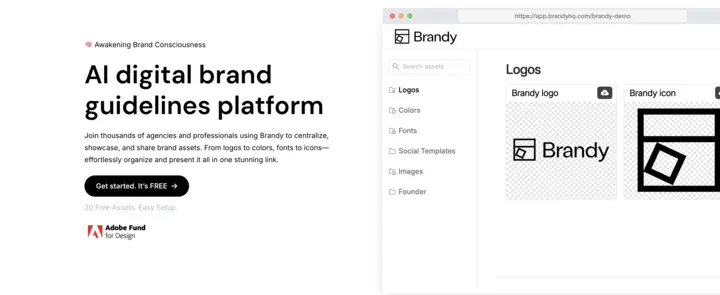
Most of these mistakes trace back to the same root cause: no single, current source of truth for what the brand actually looks like right now. Brandy solves that directly. Brand Spaces and Collections keep every logo, template, and guideline in one place, current by default, so a rebrand or logo update reaches every team at once instead of trickling out unevenly. Advanced Permissions ensure the people producing content are always pulling from the approved, current version rather than an old file sitting in someone’s downloads folder.
Better intentions alone rarely fix these mistakes. Teams fix them by using a system that makes the on-brand version the easiest one to find.
Conclusion
Branding mistakes are rarely the result of one big decision gone wrong. They are usually a series of small gaps: skipped research, inconsistent assets, feedback taken from the wrong sources, and a logo update that never reached every team. None of them is fatal on its own. Left unaddressed, they compound into a brand that feels different depending on which channel, team, or region a customer encounters.
The fix is not avoiding every mistake. It is building a system that catches inconsistencies before they reach a customer.
FAQs about Branding Mistakes
Treating branding as a one-time logo or visual update rather than an ongoing system. A new logo without consistent execution across every channel and team rarely moves a brand forward on its own.
Inconsistency happens when guidelines exist but are not easy to access or enforce day to day. If teams cannot quickly find the current, approved version of an asset, they often use outdated files or old templates because those are easier to access. This creates inconsistencies that the guidelines were designed to prevent.
Yes. Most of these mistakes are about process, not budget. A single, organized source of truth for brand assets prevents many of these issues at once. Teams still need to invest time in competitor research and audience analysis, but they can maintain consistency and create strong first impressions by making the correct version of every asset easy to find.