Brand Management Blog & Resources
AI dominated the agenda at MarTech Summit Stockholm this year. But the most important conversation was not about speed or automation. It was about control.
Across sessions and hallway discussions, one theme surfaced consistently: as marketing operations accelerate, maintaining a coherent, trustworthy brand identity is becoming harder, not easier. The barriers to content production have never been lower. The risk of brand fragmentation has never been higher.
Here is what the event revealed, and what it means for marketing teams trying to scale without losing the brand they have spent years building.
The Real Risk of AI is Losing Control of Your Brand
The productivity case for AI in marketing is well established. Faster content creation, faster campaign execution, faster access to insights. Most marketing leaders at the summit accepted this without debate.
What challenged the room was a sharper argument: the greater risk of AI-driven content production is not quality. It is context.
For decades, the customer journey followed a predictable path. Brands created content, search engines surfaced links, and customers arrived on owned digital properties where the brand controlled the experience and the narrative. That model is changing fast.
AI-powered search experiences and large language models increasingly synthesize information rather than directing users to original sources. Customers may never visit the website, read the full article, or experience the brand journey marketing teams designed.
The loss is not just traffic. It is control over your brand’s meaning. That is a harder problem to solve than a drop in click-through rate.
More Content Does Not Mean a Stronger Brand
One of the recurring tensions throughout the summit was between volume and consistency.
The tools available to marketing teams today enable them to produce content at a scale unimaginable five years ago. AI writing assistants, generative image platforms, automated campaign workflows. The output is there. Beyond the tools themselves, guidance from a B2B AI-native agency can help organizations implement AI more effectively across their marketing operations.
That scale creates a structural problem. Every new channel, market, local team, and AI tool introduces another point at which brand messaging can drift. Small inconsistencies seem harmless in isolation. At scale, they begin to shape how customers perceive the brand. And increasingly, how AI systems represent it.
This is where the argument about large language models becomes particularly relevant for brand teams. AI systems that surface brand information in search summaries, chatbot responses, and AI-generated recommendations draw on the consistency and clarity of a brand’s published content. Fragmented messaging across markets, teams, and tools prevents AI systems from accurately interpreting what a brand stands for, what differentiates it, and why customers should trust it.
The challenge for marketing leaders is not creating more content. It is creating content at scale while maintaining a brand identity that is clear enough for both humans and AI systems to interpret accurately.
Human Oversight is Becoming More Valuable, Not Less

A recurring theme across sessions was the relationship between AI-assisted production and human judgment. The conversation had matured noticeably from earlier AI adoption discussions.
Marketing leaders were no longer asking whether to use AI. That question has been answered. They were asking how to structure workflows so that human oversight remains meaningful.
AI can accelerate content creation, automate repetitive adaptation tasks, and help teams execute across more channels with fewer resources. What it cannot do is replicate the qualities customers ultimately connect with: creativity, empathy, judgment, and contextual trust.
These are not features that can be automated. They are the reason human involvement in content workflows remains essential, not as a bottleneck, but as the layer that protects brand integrity at every stage of production.
Brand Governance is the Competitive Advantage
The most practically useful shift in thinking from the summit was around governance.
Historically, governance was perceived as something that slowed marketing teams down. The discussions in Stockholm reflected a very different view. Clear brand standards and structured workflows create the confidence to scale, because teams know what they can create independently, what requires review, and what must stay locked.
Governance is not about restricting creativity. It is the condition under which creativity can be deployed consistently across markets, teams, and channels.
The questions that matter most to brand teams right now are not technology questions. They are governance questions:
- Who owns the output when AI generates content at scale?
- How are brand assets protected when they flow through third-party AI tools?
- Can the AI systems your teams use accurately interpret your brand’s identity and standards?
- What level of human oversight belongs in your content workflows, and at which stages?
Organizations that can answer these clearly are better positioned to scale content production without the fragmentation that erodes brand trust over time.
What This Means for Brand Asset Management
The summit made one thing clear: the brands that win with AI will not simply be the ones producing the most content. They will be the ones that combine efficiency with consistency, where automation serves brand integrity rather than undermining it, and where human expertise is deployed where it creates the most value.
That balance starts with one thing: a single, governed place where every approved brand asset lives.
When teams lack a centralized brand hub, every new channel, region, or AI tool becomes another opportunity for inconsistency to enter the system. Brand assets get sourced from email threads, outdated Drive folders, and wherever feels fastest in the moment. The brand starts showing up differently across markets, platforms, and partners. And AI systems, which are reading everything a brand publishes, pick up on that fragmentation.
When assets are centralized, current, and accessible to every team working on behalf of the brand, consistency stops being a manual check and becomes a structural outcome.
How Brandy Supports Governed Brand Management at Scale
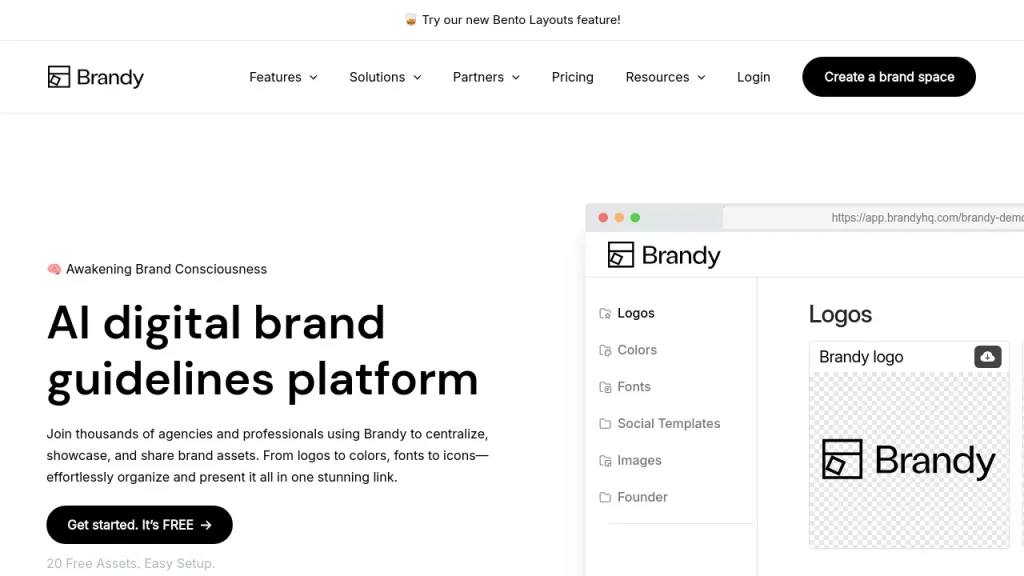
Brandy is built for exactly the balance the summit described: giving every team the access they need to produce content quickly, while keeping the brand consistent across every output.
What Brandy gives marketing teams:
- A centralized brand hub where every approved asset, guideline, and template lives in one organized, always-current place
- Shareable brand kits that give any team, region, or partner exactly what they need with one link that always reflects the current version
- Version control that keeps current assets front and center and auto-archives outdated files so they stop circulating
- Permission-based access, so each team or market sees only what is relevant to them
- Advanced tagging and metadata so anyone can find the right asset in seconds without hunting through folders
- Support for 30-plus file formats with built-in conversion, so assets are always ready for the channel that needs them
- SOC 2 Type II compliance for enterprise-grade security across the entire asset library
- No per-seat pricing, making it practical for teams working across large networks of regional contributors and external partners
Brandy is the foundation that makes governed, scalable content production possible for brand and marketing teams that are not operating at enterprise platform scale but face the same consistency challenges.
The Takeaway From Stockholm
AI is accelerating marketing. That is settled.
What is not settled is how brands protect their identity through that acceleration. The teams that invest in clear brand standards, centralized asset management, and structured content workflows are the ones that will scale without losing the coherence that makes a brand worth trusting.
Speed without consistency is not a marketing advantage. It is a brand liability.
Brandy gives your team the governed brand hub they need to move fast without going off-brand. Start for free at brandyhq.com.